Activated Carbon Filter: Why Your Grow Room Needs One
Growing indoors gives you control over just about everything: lighting, temperature, humidity, airflow, and watering. But there's one thing you don't have complete control over: the smell. As plants mature, odors can spread beyond your grow tent and into the rest of your home. That's where an activated carbon filter comes in.
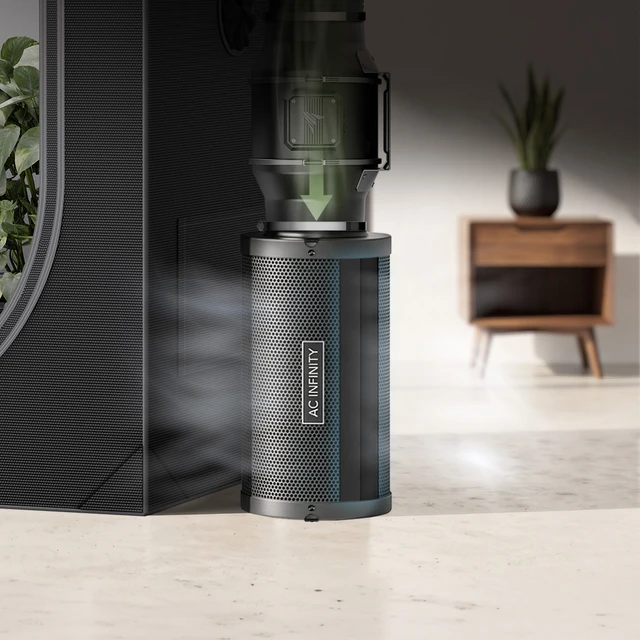
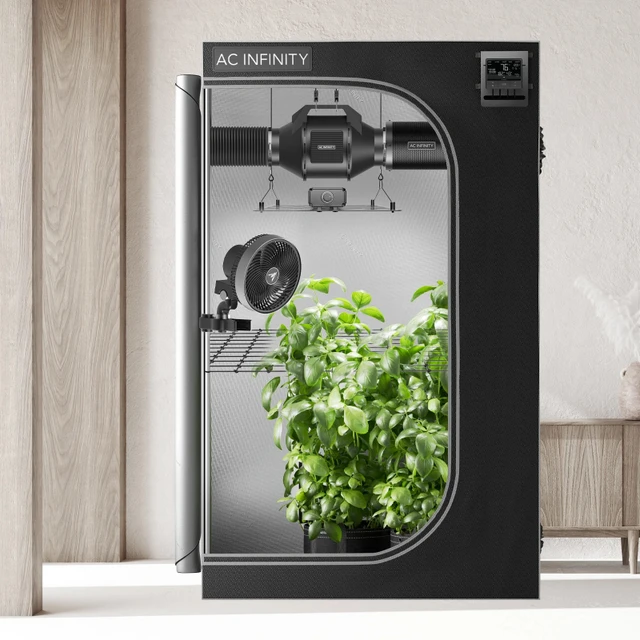
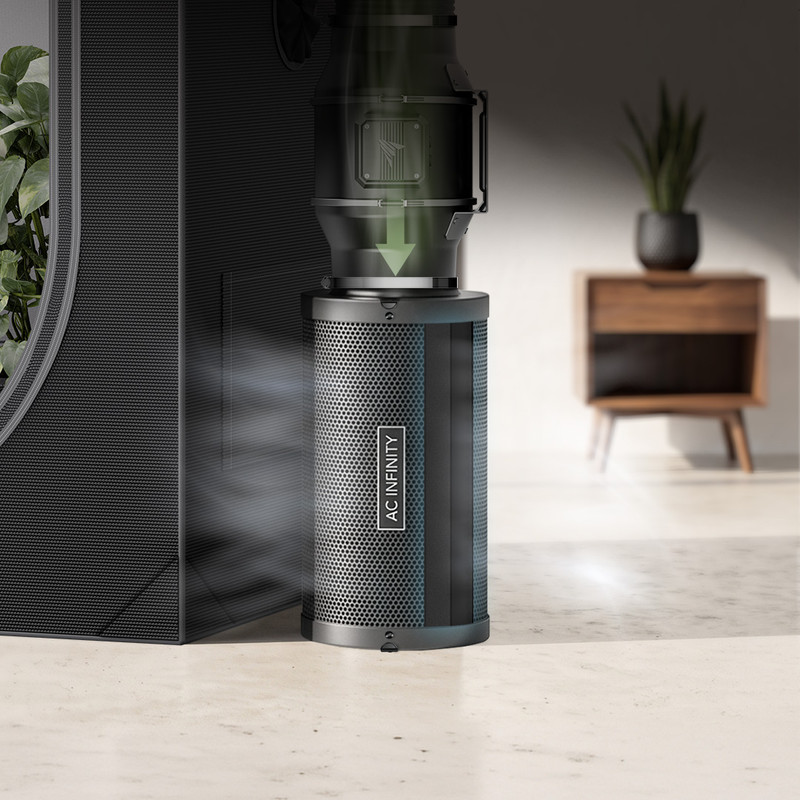
When paired with an inline fan and properly installed ducting, a carbon filter helps capture odor-causing compounds before exhaust air leaves your growing space. It's not the flashiest piece of grow equipment, but if you've ever had a room smell like your entire garden moved in, you understand why it matters.
Why Use a Carbon Filter in Your Grow Room?
A few plants on an open shelf might not create much of an odor problem. An enclosed grow tent is a different story. As plants develop, their aromas can become strong enough to travel through hallways, bedrooms, garages, and neighboring rooms.
A carbon filter helps keep those smells contained before they become a household issue. It can also be part of a ventilation system that removes warm, humid air from the tent, helping maintain a more manageable growing environment.
Some of the main benefits include:
- Odor control: Activated carbon captures many odor-causing compounds before exhaust air leaves the grow space.
- A more comfortable home: Reducing escaping odors helps prevent your growing area from taking over nearby rooms.
- Ventilation support: When paired with an inline fan, a filter becomes part of a system that exhausts warm, humid air.
- Better odor containment: Properly configured exhaust ventilation helps limit untreated air escaping through tent openings.
A carbon filter isn't necessary for every indoor garden. But if you're growing aromatic plants in an enclosed space, it's one of the more practical pieces of equipment you can add.
How to Choose the Right Activated Carbon Filter
Buying the biggest filter available isn't automatically the smartest move. The right choice depends on your fan, ducting, airflow requirements, and how much filtration capacity you need.
Match the Filter to Your Inline Fan
Start with duct diameter. Your carbon filter should match the connection size of your inline fan and ducting. Common grow-tent ventilation systems use 4-, 6-, and 8-inch connections, although larger options are also available.
Next, consider airflow, measured in cubic feet per minute (CFM). Your fan needs enough capacity to move air through the filter while accounting for resistance from the carbon bed, ducting, bends, and other restrictions. A fan's advertised maximum airflow doesn't necessarily represent the airflow you'll get once the complete system is installed.
Consider Carbon Capacity and Filter Length
The carbon inside the filter does the actual odor-control work. Its amount, quality, and bed depth all influence how effectively the filter captures compounds and how long it remains useful.
AC Infinity offers standard and extra-long carbon filters. An extra-long model provides more carbon capacity while maintaining the same duct diameter. That can be useful if you want additional filtration capacity without rebuilding your ventilation system around a larger connection size.
Standard or Refillable?
A standard carbon filter is the straightforward option. When the carbon reaches the end of its useful life, you replace the filter assembly.
A refillable model takes a different approach. AC Infinity's refillable carbon filters use reusable housings that can be loaded with fresh activated carbon when needed. Instead of discarding the entire assembly, you replace the carbon while keeping the housing.
If you grow regularly and expect to run your ventilation system through multiple cycles, a refillable filter may be worth considering. A standard filter makes replacement simple, while a refillable option gives you more control over ongoing maintenance.
AC Infinity Carbon Filter Sizes and Product Comparison
AC Infinity offers carbon filters in several duct diameters, with standard and extra-long options available in select sizes. Use the table below to compare the available models and their published maximum airflow ratings.
| Duct Size | Filter Type | Maximum Airflow | Product |
|---|---|---|---|
| 4" | Standard | 210 CFM | Duct Carbon Filter 4" with Australian Charcoal |
| 4" | Extra Long | 300 CFM | Duct Carbon Filter 4" Extra Long |
| 4" | Refillable | 210 CFM | Refillable Carbon Filter Kit 4" with Extra Charcoal Refill |
| 6" | Standard | 410 CFM | Duct Carbon Filter 6" with Australian Charcoal |
| 6" | Extra Long | 520 CFM | Duct Carbon Filter 6" Extra Long |
| 6" | Refillable | 410 CFM | Refillable Carbon Filter Kit 6" with Extra Charcoal Refill |
| 8" | Standard | 770 CFM | Duct Carbon Filter 8" with Australian Charcoal |
| 8" | Extra Long | 930 CFM | Duct Carbon Filter 8" Extra Long |
| 8" | Refillable | 770 CFM | Refillable Carbon Filter Kit 8" with Extra Charcoal Refill |
| 10" | Standard | 1,249 CFM | Duct Carbon Filter 10" with Australian Charcoal |
| 12" | Standard | 1,668 CFM | Duct Carbon Filter 12" with Australian Charcoal |
What Affects Carbon Filter Performance?
Even a quality filter can struggle when the ventilation system isn't configured correctly. A few factors have a direct impact on performance.
Humidity: High humidity can reduce activated carbon's ability to adsorb certain compounds. Water vapor can compete for adsorption sites, so managing moisture in the grow space helps support consistent odor control.
Airflow: Air needs enough contact with the carbon to capture odor-causing compounds. Match the filter to your inline fan, avoid unnecessary duct bends, and make sure connections are secure. AC Infinity's grow tent ventilation guide offers additional guidance on how fans, filters, and ducting work together.
Dust and maintenance: The fabric prefilter catches larger particles before they reach the carbon. Over time, dust can build up and restrict airflow. Inspect the prefilter regularly and clean it according to the manufacturer's instructions. Let it dry completely before reinstalling it.
Filter condition: Strong odors, frequent operation, and demanding growing conditions can shorten a filter's useful life. If smells begin escaping, check the duct connections, airflow, and prefilter before assuming the carbon is spent.
How Long Does an Activated Carbon Filter Last?
There's no universal replacement schedule for every grow room. A filter's lifespan depends on carbon quality, humidity, odor levels, airflow, and how often the system operates. A filter running continuously in a space with strong odors may wear out sooner than one used intermittently in a smaller garden.
Pay attention to performance instead of relying entirely on a calendar. If odors return, inspect the ventilation system first. Loose duct connections, restricted airflow, or a dirty prefilter can cause problems even when the carbon still has useful capacity.
When the carbon is exhausted, replace the standard filter or refill a compatible refillable model with fresh activated carbon. Cleaning the prefilter can help maintain airflow, but it won't restore carbon that has reached the end of its useful life.
Build a Better Ventilation Setup
An activated carbon filter might not be the most exciting part of an indoor grow, but it can make a noticeable difference in how manageable your setup is. The key is choosing a filter that matches your inline fan, keeping duct connections secure, and maintaining the system as it runs.
AC Infinity offers standard, extra-long, and refillable carbon filters for different ventilation setups. Explore the carbon filter collection to compare conventional models, or consider the refillable carbon filter range if you want to replace the carbon without replacing the entire housing.
Because the only thing that should be spreading through your grow room is airflow. Not the smell.