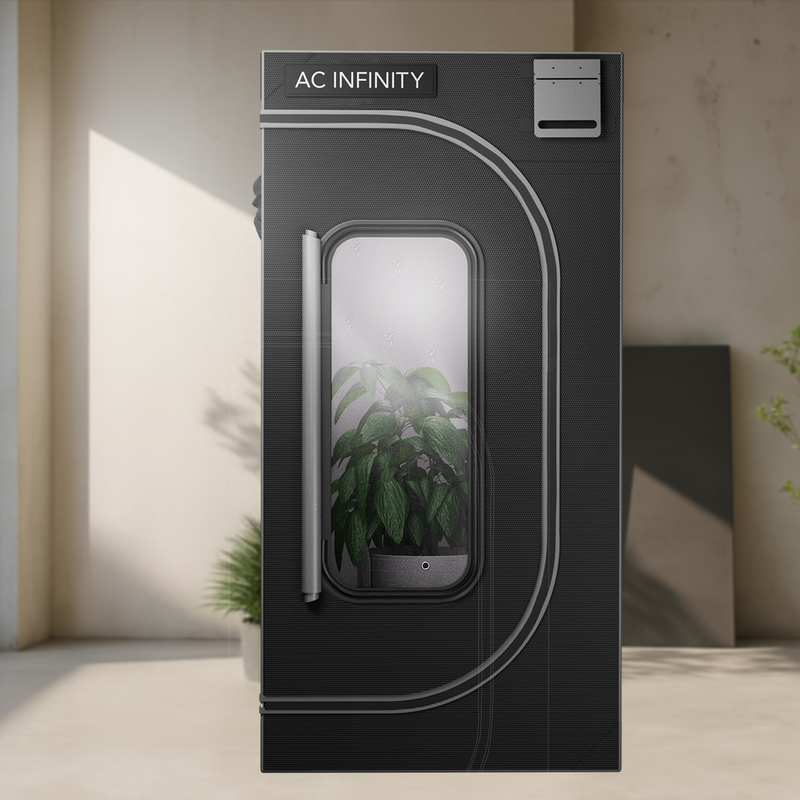
Small Grow Tent: How to Build an Indoor Garden Without Taking Over Your Space
Not everyone has an empty garage, spare bedroom, or basement to turn into an indoor garden. Sometimes you're working with a closet, an unused corner, or just enough floor space for a small setup. That doesn't mean you have to settle for a makeshift growing environment.
A small grow tent gives you a dedicated space to manage lighting, airflow, temperature, and humidity without turning your entire home into a grow room. The key is choosing a tent that fits your available space while leaving enough room for plants, equipment, and routine maintenance.
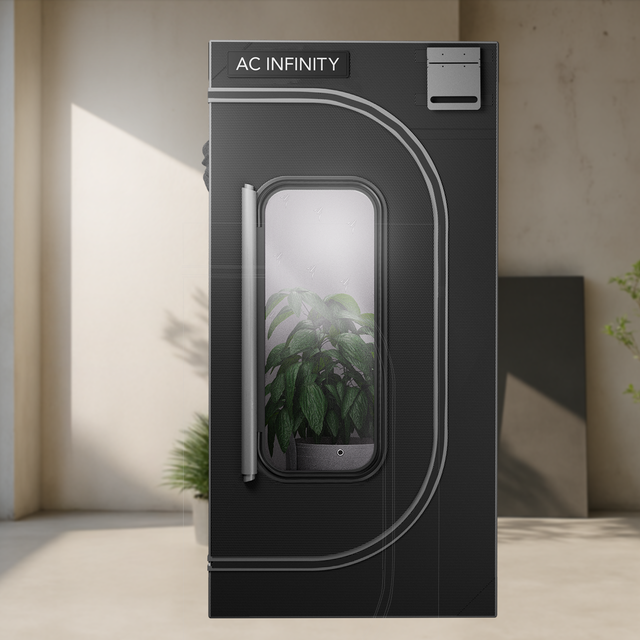
AC Infinity's CLOUDLAB series offers several compact options, including 2×2, 3×2, and 4×2 configurations. Here's how to choose the right size and build a setup that makes the most of every square inch.
Why Choose a Small Grow Tent?
A small grow tent isn't simply a larger tent with less room inside. It's a way to create a contained growing environment without dedicating an entire room to the project.
Indoor growing involves more than keeping plants under a light. Temperature, humidity, airflow, and light exposure all influence the growing environment. A tent brings these variables into one manageable space, making it easier to monitor conditions and adjust equipment.
Smaller tents also offer some practical advantages:
- Less space required: Fit a dedicated growing area into a closet, spare room, or basement.
- Simpler climate management: A smaller space can be easier to ventilate and monitor.
- Lower equipment requirements: Compact growing areas can use appropriately sized lighting and ventilation.
- Better organization: Dedicated ports and hanging bars help keep equipment in place.
The tradeoff is that limited space makes planning more important. Fans, filters, lights, and cables can quickly crowd a tent if you don't consider their placement ahead of time.
For a broader look at tent construction, sizing, and equipment, check out our complete grow tent guide. If you're starting from scratch, our indoor grow tent setup guide also walks through the equipment and planning involved in building a complete setup.
Choosing the Right Small Grow Tent Size
The best small grow tent depends on more than the amount of floor space available. Consider plant height, container size, lighting clearance, ventilation equipment, and how much room you'll need to access your plants.
Measure your available area before choosing a model. Remember to leave room for opening the tent, reaching duct ports, and performing routine maintenance. You should also consider where your inline fan and carbon filter will sit, since equipment mounted overhead can reduce usable vertical space.
2×2 Grow Tent: Compact and Space Efficient
A 2×2 grow tent is a practical option for growers working with limited floor space. Its four-square-foot footprint can fit into smaller rooms where a larger tent would be difficult to accommodate.
AC Infinity offers two options in this footprint: the CLOUDLAB 422, measuring 24" × 24" × 48", and the CLOUDLAB 722, measuring 24" × 24" × 72". Both share the same floor dimensions, but the taller 722 provides additional vertical clearance for plants and equipment.
If you're deciding between these two sizes, our 2×2 grow tent guide explores the benefits and setup considerations of this compact footprint.
3×2 Grow Tent: More Room Without a Huge Footprint
A 3×2 tent provides six square feet of floor space. Its rectangular layout offers more room to arrange plants and equipment while remaining relatively narrow.
The CLOUDLAB 632 measures 36" × 24" × 72". It's worth considering if a wider growing area would make your setup easier to organize.
4×2 Grow Tent: More Growing Area
If you have a little more room available, a 4×2 tent offers eight square feet of growing area without taking up the footprint of a square tent.
The CLOUDLAB 642 measures 48" × 24" × 72". Its longer layout provides additional flexibility for arranging plants, containers, and equipment.
Comparing AC Infinity Small Grow Tents
| Grow Tent | Dimensions | Floor Area |
|---|---|---|
| CLOUDLAB 422 | 24" × 24" × 48" | 4 sq. ft. |
| CLOUDLAB 722 | 24" × 24" × 72" | 4 sq. ft. |
| CLOUDLAB 632 | 36" × 24" × 72" | 6 sq. ft. |
| CLOUDLAB 642 | 48" × 24" × 72" | 8 sq. ft. |
Explore the AC Infinity grow tent collection to compare these models with other available sizes.
What Makes a Quality Small Grow Tent?
When you're working with limited space, the tent itself needs to do its job. Weak support bars, poorly fitting zippers, and fabric that allows unwanted light through can create problems once the equipment is installed.
AC Infinity CLOUDLAB tents use reinforced steel poles and durable 2000D Oxford canvas. Their diamond Mylar interiors are designed to reflect light throughout the growing area, helping make effective use of your lighting.
Other useful features include front zipper flaps, viewing windows, SBS zippers, and a controller mounting plate with a lightproof cable passthrough. Additional duct ports provide options for routing ventilation equipment and other accessories. You can review the CLOUDLAB duct port locations before choosing a model and planning where your equipment will go.
These details might seem minor when you're comparing dimensions, but they make a difference when you're using the tent every day.
Building a Small Grow Tent Setup
The tent is only the foundation. You'll also need equipment to provide light, exchange air, and monitor the growing environment. If you're new to indoor growing, our beginner grow tent setup guide covers the essential components and how they work together.
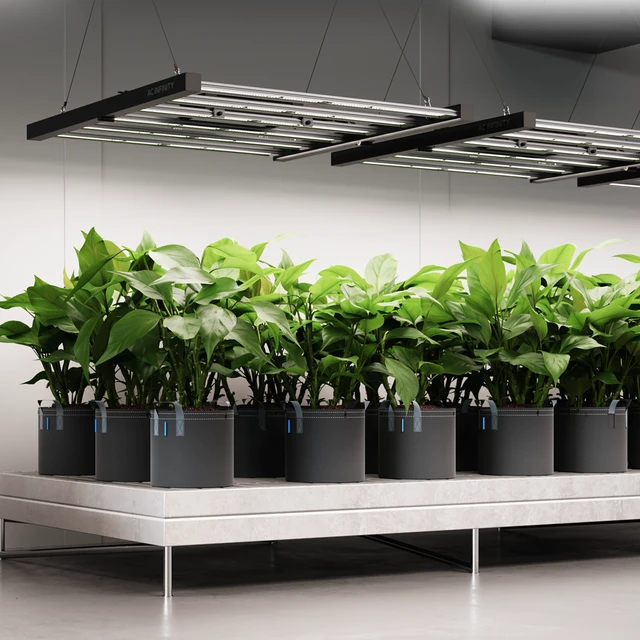
Lighting: Choose a grow light based on the tent's dimensions and your plants' requirements. For a 2×2 area, the IONBOARD S22 is a 115W full-spectrum LED designed for 2×2 coverage. Follow the manufacturer's recommendations for hanging height and brightness. If you're comparing different LED options, our guide to choosing the best LED grow lights explains what to consider when matching a fixture to your growing area.
Ventilation: An inline fan helps remove warm, humid air and supports fresh air exchange. The CLOUDLINE T4 is a 4-inch inline fan with temperature, humidity, and VPD-based programming features. When choosing a fan, consider tent volume, ducting, filters, and airflow requirements rather than duct diameter alone. Our grow tent ventilation guide explains how to plan an exhaust system and determine the airflow your space needs.
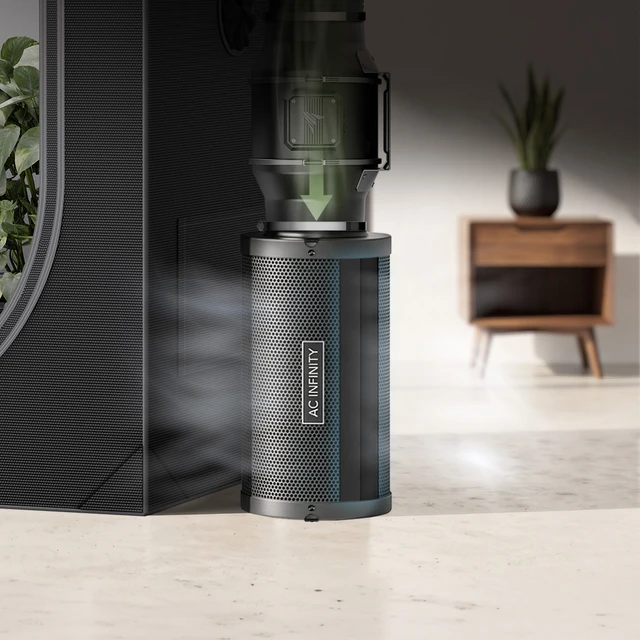
Odor control: A carbon filter uses activated carbon to adsorb odor compounds and gases as air passes through it. Match the filter to your fan and ventilation system. Our carbon filter guide explains filter sizing and how these systems work.
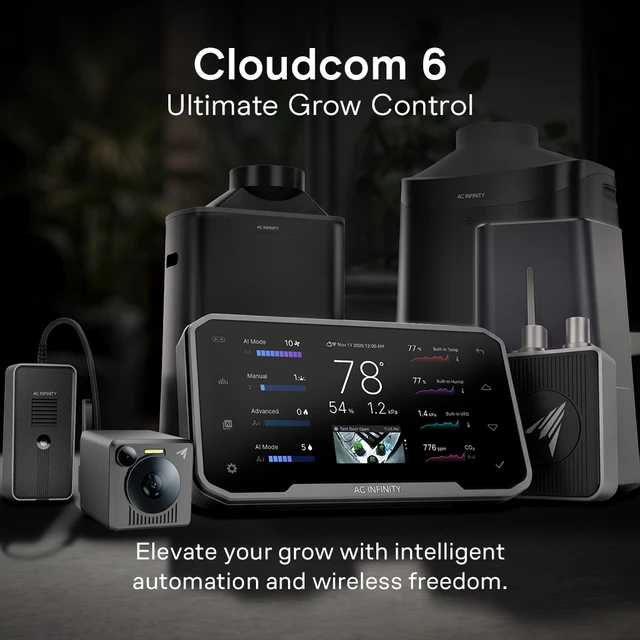
Climate monitoring: Temperature and humidity can change as lights turn on and off and plants release moisture. Monitoring both helps you understand the conditions inside the tent. VPD offers another way to evaluate the relationship between temperature and humidity. Our VPD chart guide explains how to read and apply these measurements. For a deeper look at managing the environment as a whole, see our guide to grow tent climate control.
Air circulation: An internal circulation fan moves air around the tent, helping reduce stagnant pockets. A compact option like the CLOUDRAY S6 clip fan can be mounted inside the tent to move air around the canopy. Position it so air circulates around the plants without creating excessive direct airflow.
Common Small Grow Tent Mistakes
A compact growing area leaves less room for poor planning. Avoid these common mistakes:
- Buying a tent that's too small: Account for mature plant size, containers, and equipment instead of measuring only the available floor space.
- Ignoring vertical clearance: Lights, hanging equipment, and containers all reduce usable plant height.
- Overcrowding the canopy: Too many plants can restrict airflow and make maintenance difficult.
- Mismatching equipment: Your light, fan, and filter should be selected as parts of one system rather than as unrelated purchases.
A little planning before installation can prevent a lot of frustration later. Pay particular attention to ventilation and equipment placement, since those are often the first things to become difficult in a compact setup.