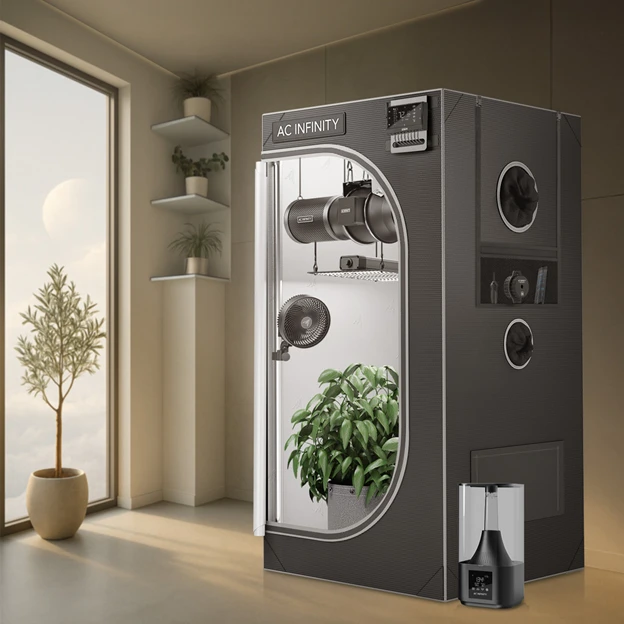
Your Indoor Grow Tent Setup Journey: What You Need
Setting up a grow tent is a great alternative not only to growing outside, but to establishing an entire grow room.
Grow tents are easier to set up and generally more cost-effective to regulate than grow rooms. Growing indoors also gives you much more precise control over environmental conditions while making year-round growing possible.
With that said, let's get started with the basic setup.
- Choose a space with enough room for the tent, equipment, and access around it.
- Make sure electricity and water are readily accessible.
- Select a grow tent size based on what and how much you plan to grow.
- Choose containers or a hydroponic system for the root zone.
- Install appropriately sized LED grow lights.
- Plan irrigation and fertilization around the needs of your plants.
- Control temperature, humidity, ventilation, and other environmental conditions.
- Add growing accessories based on the plants and techniques you plan to use.
1. Choosing a Space
Where you set up your grow tent deserves some attention and planning.
Ideally, it should be an area in your home that's out of the way, large enough to house the grow tent or tents you plan to set up, and relatively temperature stable.
If the surrounding area is consistently too hot or too cold, you'll be fighting against those conditions inside the tent.
- Large enough for the grow tent itself
- Out of the way of normal living areas
- Relatively temperature stable
- Accessible for routine plant care
- Large enough to leave clearance around the tent
- Able to accommodate HVAC or ventilation equipment if needed
Keeping the tent out of the way is not only discreet, but can also make it more convenient for your living conditions.
Closets and Small Rooms Can Work Well
Smaller spaces can be easier to maintain than larger rooms and can be closed off to help control scents. A dark closet isn't a problem because your plants will receive light from electric LED grow lights running on a specific schedule.
Before selecting a tent, measure the available space and make sure there is enough clearance around it for access and any environmental equipment you plan to install.
2. Plan Water and Utility Access
The space you choose should also have convenient access to electricity and water.
Electricity is needed to power equipment such as controllers, HVAC systems, lights, and other growing equipment, while reliable water access will make irrigation easier.
Plan for the equipment needed to power lighting, controllers, ventilation, HVAC equipment, and other components of the grow.
Easy access to your home's plumbing can make routine irrigation and plant maintenance more convenient.
Ideally, both are available from the same room. If they aren't, you'll need to make arrangements for convenient access before finishing the setup.
3. Choose the Right Grow Tent Size
You'll also need to choose a grow tent, or multiple tents.
Size is one of the most important considerations because the tent you choose will limit what, or how many plants, you can grow inside.
Available Space
Your tent needs to physically fit the room while leaving enough clearance for access and equipment.
Plant Count
The amount of growing area you need depends in part on how many plants you intend to grow.
Plant Size
What you're growing will determine how much horizontal and vertical space is needed.
Equipment
Remember that lighting, ventilation, pots, ducting, and other equipment also take up space inside or around the tent.
Advance grow tents in the CLOUDLAB series are made from high-quality canvas and durable steel pole construction. They also feature reengineered Mylar interiors for a high level of reflectivity to support optimal light conditions.
You also have the option of starting with a smart grow tent kit.
Build Your Own Setup
Choose the tent, lighting, ventilation, controllers, and other components individually based on your growing requirements.
Start With a Grow Tent Kit
Smart grow tent kits are available in multiple sizes and include a tent along with LED grow lights, ventilation accessories, and environmental controls to help automate the setup.
4. Choosing Fabric Pots

For those who will not be establishing a hydroponic system, you'll need a container for your plants.
We recommend fabric pots for several reasons.
Fabric pots can be collapsed and stored out of the way when they aren't being used.
Fabric construction allows effective evaporative release of excess moisture and can help regulate growing-medium conditions.
Fabric pots enable air pruning, helping prevent plants from becoming rootbound.
When choosing a size, select fabric pots that are appropriate both for your grow tent and for what you're growing.
5. Installing LED Grow Lights
For indoor growers, LED grow lights are indispensable and offer several advantages over incandescent and HID, or high-intensity discharge, grow lights.
- More energy efficient
- Produce relatively little heat
- Easier to incorporate into climate control
- Reliable operation
- Long operating life
- Lower long-term replacement requirements
Their efficiency and lower heat output can make it easier to regulate temperature within the grow tent.
LED grow lights are also reliable and can last considerably longer than many alternatives, potentially reducing long-term operating and replacement costs.
IONFRAME Series
The IONFRAME series features bar-style lighting utilizing Samsung EVO LEDs with smart controls, sunrise and sunset dimming, and 10 brightness levels.
The lights support daisy-chaining for up to 80 lights, making them configurable for a wide range of indoor grow setups.
You can also explore the broader selection of LED grow lights to match lighting to your grow space.
The number of lights you'll need will depend on what you're growing and how many tents you have. Plants that require greater full-sun exposure will naturally require brighter overhead lighting and potentially more hours of light each day.
6. Set Up Irrigation and Fertilization
Hydroponic systems are one way to grow indoors, but even with a conventional setup you'll need to properly maintain soil moisture to support plant health.
This can be done manually, or automated equipment such as sprayers can help manage irrigation.
Maintain appropriate moisture levels throughout the growing medium.
Provide the nutrients needed for the plant's current stage of growth.
Change watering and feeding as the plant progresses through its lifecycle.
You'll also need appropriate fertilizers to ensure your plants are properly nourished at each stage of growth, from seedlings through the vegetative stage and into flowering.
7. Control Temperature, Humidity, and Ventilation

Maintaining the proper temperature and humidity while providing adequate ventilation and fresh air is vital to overall plant health.
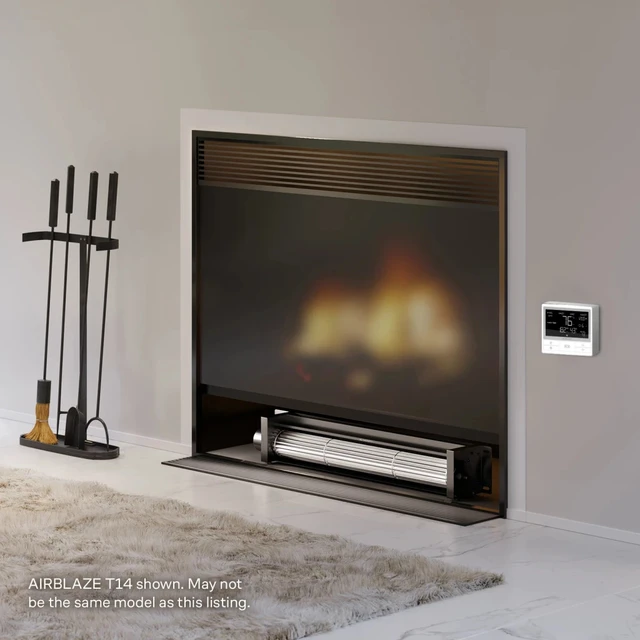
Manage conditions when the grow environment becomes too cold.
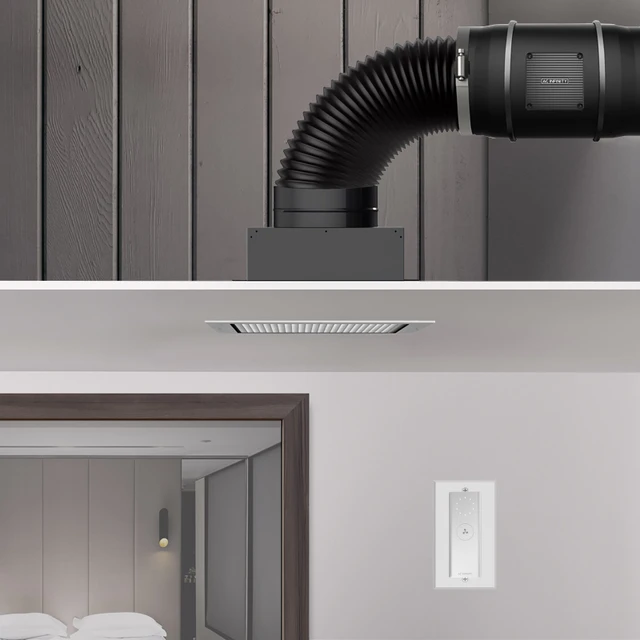
02 CoolingControl excess heat when environmental temperatures rise.
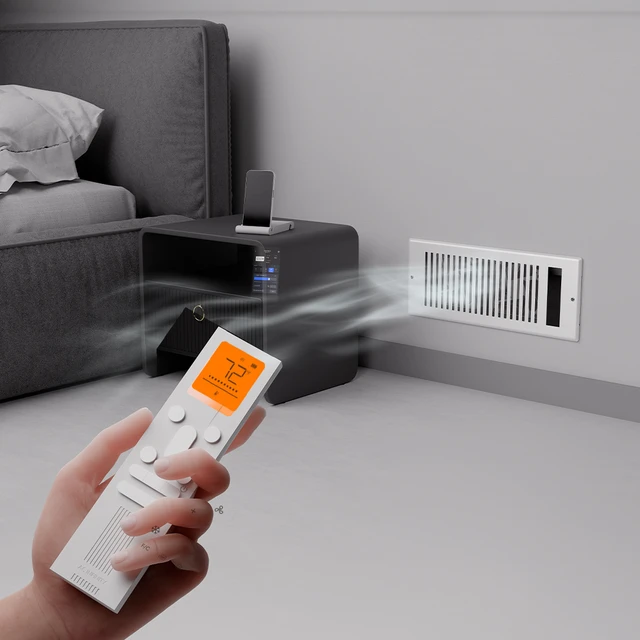
03 VentilationMove and exchange air to help maintain the growing environment.
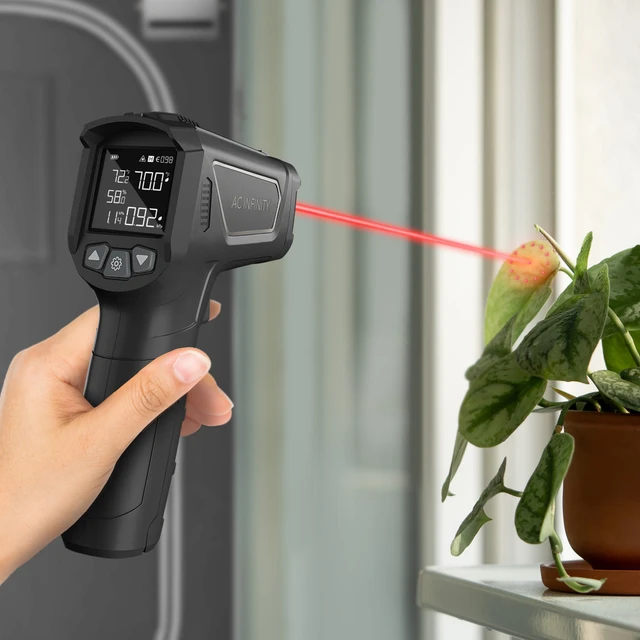
04 Monitoring & ControlMonitor environmental conditions and automate compatible grow equipment.
Smart environmental controls can help monitor temperature, humidity, and other grow conditions while providing remote control and automation features.
AC Infinity's climate and hydro sensors can also help streamline monitoring of environmental and hydroponic measurements including temperature, humidity, VPD, pH, EC, TDS, and more.
8. Don't Overlook Humidity
Humidity is one element of growing conditions that indoor growers can sometimes overlook.
Humidifiers and dehumidifiers can help maintain atmospheric humidity within the desired range as conditions change.
HYDRONE 5
Designed to provide dehumidification for grow environments up to the stated 5' × 5' capacity.
HYDRONE 7
Designed for larger grow environments and equipped with an AI-powered VPD controller.
Maintaining temperature, humidity, and VPD is just as much a part of the growing environment as providing adequate nutrients, light, and water.
The individual conditions required will ultimately depend on the species and cultivar you're growing.
9. Add the Growing Accessories You Need
In addition to essential indoor growing accessories such as grow tents, lights, pots, fertilizer, and HVAC equipment, other accessories can support plant upkeep and harvest.
Depending on what you ultimately decide to grow, these accessories can make training, trimming, and harvesting easier and more productive.
Putting the Grow Tent System Together
A successful grow tent isn't defined by one individual component. Each piece supports the environment around the plant.
Establish the controlled area where your plants and equipment will operate.
Provide appropriate lighting, containers, irrigation, and nutrients.
Manage temperature, humidity, and ventilation around the plants.
Track conditions and automate compatible equipment where appropriate.
Remember, Conditions Depend on What You're Growing
At the end of the day, you need to consider much more than just the size of the grow tent you choose for indoor growing.
Building an indoor grow is easier when the major components are planned as one system. Start with the space, then match the tent, lighting, ventilation, and controls to the plants and conditions you intend to maintain. That bigger picture is where grow tents and grow tent kits fit in, with ultimate grow tent guide and inline fans helping connect the space to ventilation and lighting.