


Grow Room Dehumidifiers: When You Need One and How to Choose the Right System
Indoor growing has a weird way of turning ordinary people into environmental control fanatics. It starts innocently enough. You buy a light, pick up a few plants, and convince yourself you're building a simple setup in a spare room or grow tent. A few weeks later you catch yourself checking humidity readings before breakfast, reading airflow discussions at midnight, and wondering why your grow room suddenly feels like somebody relocated a patch of rainforest directly into your house.
That shift usually happens because indoor growing slowly reveals what is actually controlling the room. Most beginners assume lighting is the center of everything. Lights feel important because they are visible, expensive, and impossible to ignore. But eventually you realize plants are not only responding to light. They are reacting to the entire environment surrounding them. Temperature, airflow, humidity, and moisture balance all start working together, and once one variable drifts out of range, everything else begins following it.
That is usually where dehumidifiers enter the conversation. Most growers do not initially plan around dehumidifiers because humidity sounds like one of those background variables you casually monitor and forget about. Then the grow room starts feeling heavy, the air feels dense, and plants begin behaving differently even when every other number appears normal. Suddenly moisture becomes the loudest thing happening inside the room, and understanding when dehumidifiers become necessary becomes the difference between a setup that constantly fights itself and a setup that actually feels stable.
Indoor Plants Secretly Create Their Own Climate
One of the stranger realities of indoor cultivation is that plants are not passive objects sitting under lights. They actively shape the environment around them every single day. Through transpiration, plants continuously release water vapor into the air as part of their normal biological processes. Every leaf acts like a tiny moisture pump quietly adding humidity into a confined indoor space.
During early growth stages this barely feels noticeable because smaller plants simply do not release enough moisture to dramatically shift environmental conditions. The problem starts showing up later when healthy plants begin stacking growth and the canopy expands. Suddenly dozens or hundreds of leaves are releasing moisture at the same time, and the room starts holding more water vapor without giving you obvious warning signs.
This is where many growers underestimate how quickly humidity can take over a space. Indoor rooms are enclosed systems, and moisture does not simply disappear because you added another fan. If enough humidity enters the environment and nothing actively removes it, the room begins carrying more moisture than it was designed to handle. This is exactly where dehumidifiers begin shifting from optional equipment into critical environmental tools.
Signs Your Grow Room Needs a Dehumidifier
Humidity issues rarely appear overnight. Most grow rooms drift into trouble gradually, which makes moisture problems surprisingly easy to miss. Growers often spend time adjusting lighting schedules, airflow settings, or nutrient routines before realizing excess humidity quietly became the variable creating instability.
The room itself usually starts dropping hints before serious problems develop. Environmental readings become harder to maintain, airflow feels heavier than normal, and plants begin responding differently even though your routine has not changed.
Common warning signs include:
- Humidity consistently staying above target ranges
- Heavy or stagnant air throughout the grow space
- Condensation forming on walls or equipment
- Slow plant recovery after watering or training
- Humidity spikes after lights turn off
- Dense canopies trapping moisture
- Difficulty maintaining VPD targets
- Environmental readings constantly drifting
- Unexpected odor changes throughout the room
Many growers notice these issues most during lights-off periods. Temperatures naturally drop while moisture levels remain elevated, causing humidity to climb quickly overnight. Environmental swings often happen while nobody is standing in the room watching sensors or checking readings.
That is where automated dehumidification becomes useful. Instead of reacting after moisture levels move out of range, environmental systems can maintain stability before the room starts drifting.
Why Fans Can't Always Replace Dehumidifiers
Many growers assume stronger airflow automatically solves humidity problems. Fans absolutely matter because they keep air moving, prevent stagnant pockets, and help create healthier growing conditions. The problem is that moving air and removing moisture are two very different jobs.
Ventilation systems work by exchanging indoor air with surrounding air. That approach works well until the surrounding environment becomes part of the problem. If the room outside your tent already carries elevated humidity, bringing in more air sometimes introduces additional moisture instead of solving anything.
Seasonal changes make this even more noticeable. Warm months and naturally humid climates can create situations where growers continuously increase airflow while humidity numbers barely move.
Dehumidifiers solve the problem differently because they actively remove water from the air itself. Instead of relying on surrounding conditions improving, they directly reshape the environment inside the grow room. Moisture control becomes more predictable, especially when environmental conditions outside the room constantly change.
How to Choose the Right Grow Room Dehumidifier
Finding a grow room dehumidifier is usually less about buying the biggest machine available and more about understanding how your environment behaves. Moisture production changes as plants mature, canopies expand, and environmental conditions shift throughout the grow cycle.
Smaller plants create relatively modest humidity levels early on. Later in flowering, that same room may suddenly hold significantly more moisture as larger plants transpire throughout the day.
Several factors influence what type of system makes sense:
- Grow room or tent size
- Plant count and canopy density
- Vegetative versus flowering stages
- Existing airflow and ventilation setup
- Local climate conditions
- Environmental automation needs
The goal is not simply lowering humidity. The goal is maintaining stability without constantly making manual adjustments.
What Size Grow Room Dehumidifier Do You Need?
Sizing becomes easier once growers stop thinking strictly about room dimensions and start thinking about moisture production. Two rooms with identical square footage can behave very differently depending on plant count, canopy size, watering habits, and environmental conditions.
A lightly planted tent with small vegetation creates very different humidity levels than a packed flowering room full of mature plants.
As plant mass increases, transpiration rises with it. More leaves release more moisture, and that additional humidity begins accumulating quickly inside enclosed spaces. Many growers discover their original environmental equipment worked perfectly during early growth stages but struggled once flowering expanded across the room.
Planning around future plant growth instead of current conditions usually creates a more stable setup long term.
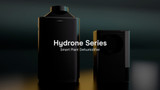
HYDRONE 5 vs HYDRONE 7: Choosing the Right System
Choosing between the HYDRONE 5 and HYDRONE 7 often comes down to room size and how aggressively humidity builds throughout your environment.
The HYDRONE 5 works well for growers managing smaller grow tents and compact spaces where moisture control needs remain moderate. It gives growers active humidity management without overcomplicating smaller setups.
The HYDRONE 7 becomes more useful as plant count, canopy density, and environmental demand increase. Larger rooms and heavier flowering environments often create moisture levels that require greater dehumidification capacity.
The important part is creating enough headroom so environmental equipment can respond before humidity starts drifting outside your target range.
Why Integrated Environmental Control Matters
Modern indoor growing slowly turned into climate management. Humidity no longer behaves independently from airflow, temperature, VPD, and environmental trends. Every variable influences something else inside the room.
Lighting affects temperature. Temperature affects humidity. Humidity affects transpiration. Transpiration affects plant behavior.
Managing those systems separately eventually starts feeling like a constant cycle of adjustments.
Integrated environmental systems simplify that process because equipment works together instead of operating independently. Dehumidifiers become part of a larger ecosystem that monitors environmental changes and responds automatically.
Eventually something changes psychologically too. The room stops feeling like a collection of equipment fighting each other and starts feeling like a complete system that finally works together.
The Real Purpose of Dehumidifiers Is Environmental Stability
People often think dehumidifiers simply lower humidity numbers. Technically that is true, but it misses the bigger picture entirely. The real purpose of dehumidifiers is creating stability across the entire grow environment so every other system performs more predictably.
Stable rooms create healthier plants because healthy plants prefer consistency over constant correction. Controlled humidity supports stronger transpiration, balanced airflow, and cleaner environmental patterns throughout every stage of growth. Once a room reaches that level of balance, something changes psychologically for growers too.
The room stops feeling like a collection of equipment struggling to cooperate and starts feeling like a complete system that finally works together. That is usually the point where most growers realize dehumidifiers were never just about removing moisture. They were about making the entire grow room feel under control, and AC Infinity dehumidifiers were built around making that process easier.


