Plastic vs. Fabric Pots: A Comparison
When growing plants indoors, conventional plastic pots filled with potting soil may be the first option that comes to mind, but they aren't the only choice.
Among the alternatives are fabric pots, sometimes called grow bags. Their breathable, soft-sided construction creates a different root-zone environment than a traditional rigid plastic container.
Both options can work well indoors. Understanding how they differ can help you choose the right container based on your plants, watering habits, available space, and growing environment.
- Fabric pots allow roots to air prune rather than continuously circling the container.
- Breathable fabric allows excess moisture to escape more readily.
- Fabric pots respond more quickly to changes in temperature.
- Plastic pots retain moisture longer and may require less frequent watering.
- Rigid plastic containers generally offer greater long-term durability.
- Fabric pots can be folded flat when they're not in use.
- Container size remains important regardless of which material you choose.
Fabric Pots vs. Plastic Pots
| Consideration | Fabric Pots | Plastic Pots |
|---|---|---|
| Root Development | Supports air pruning and lateral root development | Roots may circle the interior as they reach the container wall |
| Moisture | Breathable material allows moisture to escape more readily | Retains moisture for longer periods |
| Temperature | Growing medium can heat and cool more rapidly | Provides greater insulation from temperature changes |
| Durability | Can last multiple seasons with proper care | Rigid construction generally provides greater longevity |
| Storage | Can be emptied and folded | Requires more storage space, although many can be stacked |
| Cleaning | Soft fabric can require more effort to clean | Rigid surfaces are generally easier to clean |
| Cost | Can cost more than basic plastic containers | Often the more affordable option |
About Fabric Pots
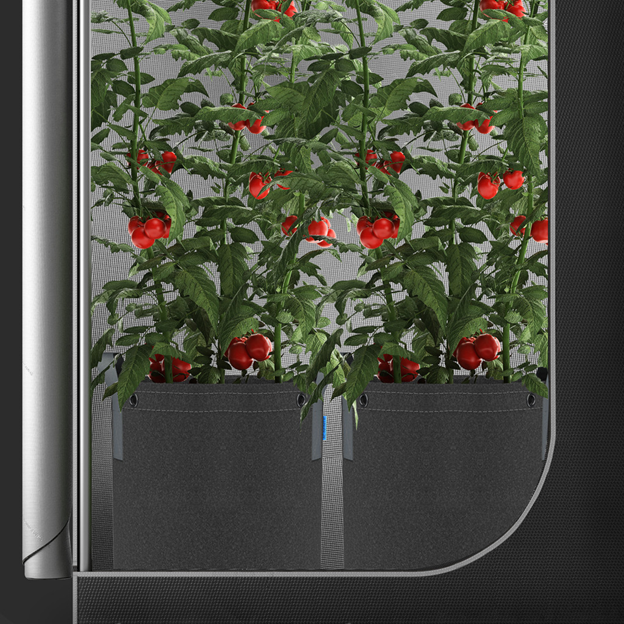
Fabric pots are soft-sided growing containers constructed from fabric rather than rigid plastic or ceramic.
Quality fabric pots can be made from heavy-duty, non-woven material designed to resist tearing while remaining breathable. They can be used for herbs, flowers, vegetables, and a wide range of other plants.
When properly cared for, fabric pots can also be reused across multiple growing seasons.
Air Pruning
Breathable walls expose root tips to air, encouraging a different root structure than a sealed container wall.
Moisture Control
Excess moisture can escape through the breathable fabric instead of relying solely on drainage holes.
Temperature Response
The growing medium can heat and cool more rapidly because the sides of the container are breathable.
Compact Storage
Empty fabric pots can be folded down when they aren't being used.
How Air Pruning Works
One of the biggest advantages associated with fabric grow bags is their ability to encourage air pruning.
Air pruning occurs when a growing root reaches the breathable wall of the container and is exposed to air. The exposed root tip dries out and stops extending in that direction.
Instead of continuing to circle the interior of the container, the plant can develop additional lateral roots, helping create a more distributed root system.
The root expands toward the outside wall of the container.
The breathable container exposes the root tip to air.
The exposed root tip dries and stops extending outward.
The plant produces additional branching throughout the root system.
Instead of allowing roots to continuously circle a rigid container, fabric pots encourage roots to branch throughout the growing medium.
Moisture & Temperature Regulation
Fabric pots also behave differently from plastic containers when it comes to moisture and temperature.
Moisture Control
It can be easy to overwater a plant grown in a conventional plastic pot, even when drainage holes are present, because the growing medium may take longer to dry.
With a fabric grow bag, the breathable sides allow excess moisture to escape more readily. This can help manage soil saturation and reduce the prolonged wet conditions associated with issues such as root rot.
Breathable walls encourage faster moisture loss, which can help prevent the growing medium from remaining saturated for extended periods.
Rigid walls retain moisture more effectively, which may be useful for plants that prefer consistently moist growing conditions.
Temperature Regulation
The growing medium in a fabric pot can heat up and cool down more rapidly because air can pass around and through the breathable container.
Plastic pots provide more insulation, slowing temperature changes within the growing medium. Neither characteristic is universally better. The preferred option depends on what you're growing and how sensitive the plant is to changes in root-zone temperature.
Handling & Storage
Some of the benefits of fabric pots aren't directly related to plant health.
AC Infinity fabric pots include handles and rings designed to make containers easier to transport or hang. Their flexible construction also creates a significant storage advantage.
- Soft-sided and lightweight construction
- Handles can make containers easier to move
- Rings provide additional hanging options
- Empty containers can be folded flat
- Require less off-season storage space than rigid containers

About Plastic Pots
Fabric grow bags offer several advantages, but there are also situations in which conventional plastic pots may be a better fit.
Lower Initial Cost
Plastic pots are often less expensive than fabric grow bags, making them worth considering when upfront cost is a priority.
Long-Term Durability
Quality fabric pots can last multiple seasons, but solid plastic containers generally provide greater long-term durability.
Moisture Retention
Plastic walls slow moisture loss, which can reduce watering frequency for plants that prefer consistently moist growing media.
Easier Cleaning
Rigid plastic surfaces are generally easier to clean than fabric containers.
Plastic containers also tend to insulate the growing medium more effectively. Depending on the plant and environment, that slower response to temperature changes can be useful.
Although plastic pots require more storage space, many designs can be stacked when they're not being used.
Keep Container Size in Mind
Regardless of whether you choose fabric, plastic, or ceramic containers, choosing the appropriate size is important.
Growing a plant in a container that's too small can restrict the root system and contribute to the plant becoming root bound.
Plan for the Mature Plant
Don't choose a container based only on the size of the plant today. Consider how large its root system will become and whether the container provides enough space for the plant's expected growth.
AC Infinity offers fabric pots in sizes ranging from 1 to 25 gallons, providing options for everything from herbs to tomatoes, peppers, root vegetables, and even small trees.
Self-watering pot bases can also be incorporated into a growing setup to assist with moisture control and help maintain consistent soil conditions.
Which Container Is Right for You?
Fabric and plastic pots can both be suitable for indoor growing. The right choice depends on what you're growing, your watering habits, available storage space, budget, and the root-zone conditions you want to create.
- You want to encourage air pruning.
- Overwatering is a concern.
- You want greater airflow around the growing medium.
- Compact storage is important.
- You want lightweight containers that are easier to move.
- Lower initial cost is a priority.
- You want maximum container durability.
- Your plants prefer consistently moist growing media.
- You want to reduce watering frequency.
- Easy cleaning is important to your setup.
Choose the Container That Fits Your Grow
There isn't one container material that's ideal for every indoor grow.
Fabric pots provide advantages in air pruning, drainage, moisture regulation, portability, and storage. Plastic pots offer their own benefits in affordability, durability, moisture retention, insulation, and ease of cleaning.
Consider the needs of your plants and your growing environment, then choose the container that gives you the root-zone conditions you want to maintain.