Organizing Your Grow Tent
Keeping your grow space organized is often easier said than done. Between equipment, planters, cables, and additional supplies, grow tents can fill up quickly.
Planning where equipment will live before your grow is fully assembled can help preserve valuable space inside the tent. When space becomes limited, accessories such as mounting bars and gear boards can also help move equipment off the floor and create a cleaner, more organized setup.
- Plan your equipment layout before assembling the entire grow.
- Leave usable space outside the tent when possible.
- Consider placing compatible equipment outside the immediate growing environment.
- Use duct ports strategically to route airflow, humidity, and heat.
- Use mounting bars to create additional equipment mounting points.
- Use a gear board to organize equipment and manage cables vertically.
- Keep the grow tent floor as open as possible for plants and equipment that must remain inside.
Plan Your Grow Space Ahead of Time
To maximize efficiency, it is best to plan your grow space arrangement from the start.
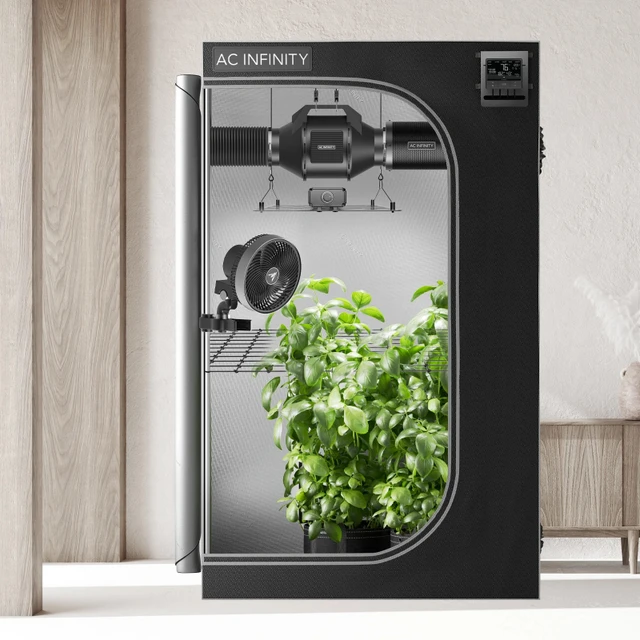
Ideally, your setup will have some additional room outside the tent. This gives you the flexibility to place certain grow devices outside of the immediate growing environment, leaving more room inside for plants and equipment that need to remain within the tent.
Prioritize space for plants and equipment that needs to operate directly within the growing environment.
Inline fans, humidifiers, and heaters can potentially be positioned outside the immediate growing environment when the setup allows.
Every piece of equipment that can be positioned outside the tent can preserve more usable space around your plants.
Use Duct Ports to Your Advantage
Duct ports can play an important role in keeping a grow tent organized.
By taking advantage of ducting and the tent's available ports, growers can exhaust stale air and route fresh air, humidity, and heat into the growing space.
Multiple ports in the tent canvas also provide flexibility when determining where ducting should enter or exit the tent, helping prevent airflow equipment from creating unnecessary clutter.
Determine what equipment needs to remain inside and what can potentially be placed outside.
Select duct ports that create the cleanest path into and out of the tent.
Use ducting to move stale air out or deliver fresh air, humidity, and heat where needed.
Keep equipment and duct runs from unnecessarily crowding the growing area.
Think About Routing Before Installation
Choosing convenient duct ports before mounting equipment can help prevent ducting and cables from crossing through areas you later need for plants or additional grow devices.
Create More Usable Space
Even with careful planning, many growers eventually find themselves running out of room.
If you want to add another grow device without upgrading to a larger tent, using the tent's vertical space can provide additional mounting and organization options.
Use Vertical Space
Move compatible equipment away from the floor and onto mounting surfaces within the tent.
Keep the Floor Clear
Preserve valuable floor space for plants, planters, and equipment that cannot be relocated.
Consolidate Equipment
Group controllers, drivers, hygrometers, and other equipment together instead of scattering them throughout the tent.
Manage Cables
Keep cords organized so additional equipment does not create unnecessary clutter.
Add Support with Mounting Bars
Mounting bars offer a fast and simple way to maximize the amount of usable room within a grow tent.
These steel accessory bars firmly hold in place to provide additional reinforcement for grow equipment.
- Additional grow lights
- Fans
- Other compatible grow equipment
- Trellis nets for plant training or support
By creating additional support points within the tent, mounting bars allow growers to make better use of the space around their plants without immediately moving to a larger grow tent.
Organize Equipment with a Gear Board
Mounting bars can create more equipment space, but they do not necessarily solve another common grow tent problem: cable management.
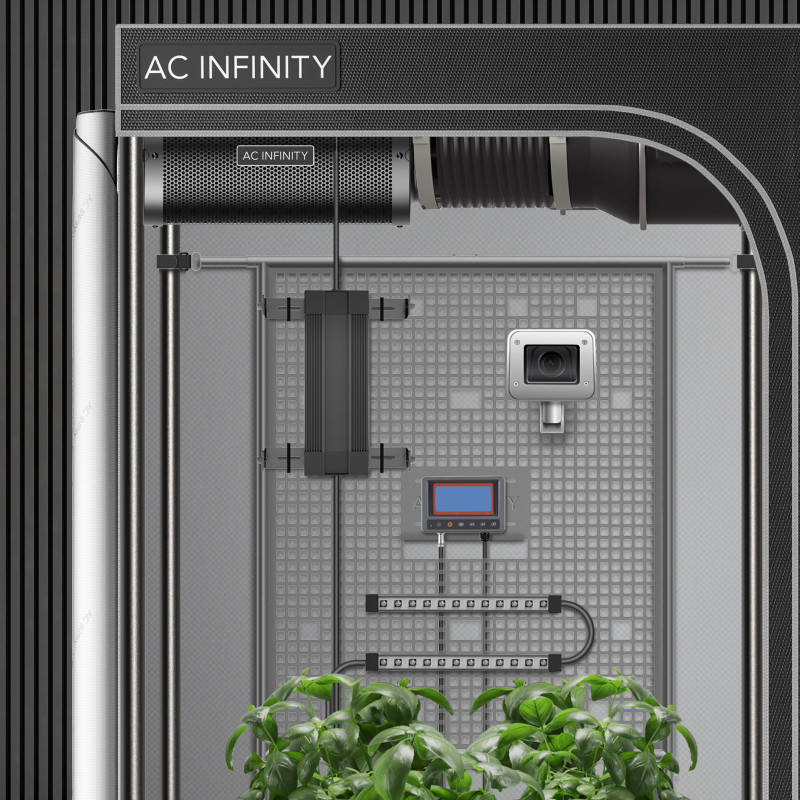
For growers looking to organize both grow devices and their cords, a gear board provides a vertical equipment organization solution.
Made of steel with a mesh panel body, gear boards provide a support surface for equipment while also helping organize the cables connected to it.
Grow Tent Gear Board
Use a gear board to consolidate equipment onto one vertical surface while routing connected cables behind the board.
Positioned flat against the tent wall, these panels can immediately reduce floor clutter. They can also be adjusted to fit the tent while leaving duct ports available for use.
Mounting Bars vs. Gear Boards
Both accessories help growers make better use of limited grow tent space, but they address different organization challenges.
Mounting Bars
Best suited for creating additional mounting and reinforcement points inside the grow tent.
- Supports additional grow equipment
- Useful for lights and fans
- Can support trellis nets
- Helps make use of available tent space
Gear Board
Best suited for consolidating grow devices while also organizing their cables.
- Creates a vertical equipment surface
- Organizes controllers and drivers
- Allows cords to be routed behind the board
- Helps declutter the tent floor
| Organization Need | Mounting Bars | Gear Board |
|---|---|---|
| Add equipment support | Yes | Yes |
| Mount lights or fans | Yes | Designed more for equipment organization |
| Support trellis nets | Yes | Not the primary purpose |
| Organize controllers and drivers | Limited | Yes |
| Manage cables | Limited | Yes |
| Reduce floor clutter | Yes | Yes |
Build an Organized Grow Tent
- Plan the tent layout. Determine where plants, planters, lights, ventilation equipment, and environmental controls will be positioned.
- Identify equipment that can remain outside. When practical, consider locating equipment such as inline fans, humidifiers, or heaters outside the immediate growing environment.
- Choose your duct routes. Use available tent ports to create convenient paths for airflow, humidity, and heat.
- Use vertical space. Add mounting bars when additional equipment support or reinforcement is needed.
- Consolidate equipment and cables. Use a gear board to organize devices such as LED drivers, controllers, and hygrometers in one location.
- Preserve your floor space. Keep as much of the tent floor available as possible for plants and equipment that needs to remain at ground level.
Make Every Inch of Your Grow Tent Count
Whether you're planning your first grow or simply trying to fit another piece of equipment into your existing setup, organization starts with using the available space strategically.
Planning equipment placement, taking advantage of duct ports, moving compatible devices outside the tent, and using mounting accessories can help create a cleaner and more functional growing environment.
Plan horizontally, organize vertically, and preserve valuable growing space for your plants.