What Is a Seedling Heat Mat?
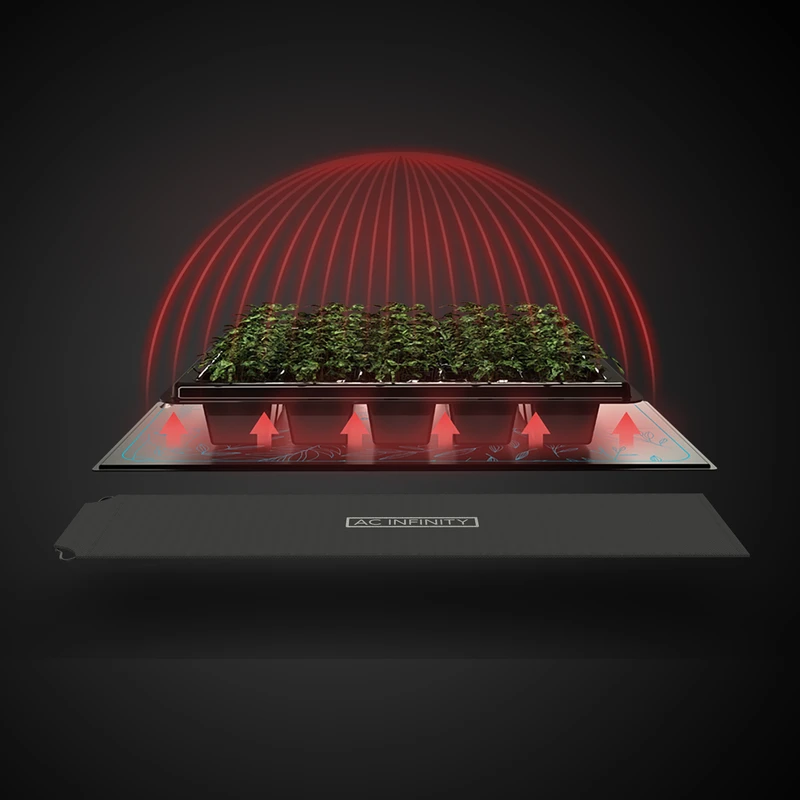
A seedling heat mat is a low-wattage heating device that gently warms the soil or root zone beneath seed trays, propagation containers, and nursery pots. By providing consistent bottom heat, it can help maintain the temperatures many seeds need for faster, more even germination.
- Seedling heat mats provide gentle bottom heat directly beneath propagation trays and containers.
- They are most useful when the growing medium is cooler than the preferred germination temperature of the seeds.
- Warm-season and tropical plants generally benefit more from supplemental heat than cool-season crops.
- Choose a heat mat based on propagation area, temperature control, water resistance, even heating, and durability.
Room temperature doesn't always tell you how warm your growing medium is. Trays near windows, in basements, garages, or other cool areas can stay too cold for warm-season seeds. A heat mat creates a warmer microenvironment directly beneath the tray without requiring you to heat the entire room.
What Is a Seedling Heat Mat Used For?
Seedling heat mats are primarily used during seed germination and early propagation. Seeds need moisture, oxygen, and an appropriate temperature range to begin germinating, and cold growing media can slow that process.
- Starting vegetable seeds indoors
- Propagating herbs and flowers
- Starting tropical plants and houseplants
- Improving germination consistency
- Maintaining warmer root-zone temperatures during colder seasons
How Does a Seedling Heat Mat Work?
A seedling heat mat sits beneath a propagation tray and transfers gentle heat upward into the bottom of the container and growing medium. The result is a more consistent root-zone temperature than relying on fluctuating room temperatures alone.
A typical setup is simple:
- Place the Heat MatPlace the mat on a stable, flat surface.
- Position Your TraySet the propagation tray or containers directly on the mat.
- Sow Your SeedsSow seeds according to their growing requirements.
- Set the TemperatureSet the target temperature if your mat has temperature control.
- Monitor GrowthMonitor seedlings as they emerge and develop.
AC Infinity SUNCORE mats use far-infrared heating technology designed to distribute warmth across the growing surface. Selected models also include digital temperature controllers for more precise temperature management.
How Long Do Seeds Take to Germinate?
Germination time varies by plant, seed age, moisture, growing medium, and temperature. The ranges below are general guidelines rather than guarantees. Always follow the seed supplier's recommendations when they differ.
More heat isn't automatically better
A heat mat is most useful when the growing medium is cooler than the seed's preferred germination range. Use the temperature recommended for the specific plant.
Choosing a SUNCORE Seedling Heat Mat
AC Infinity's SUNCORE lineup includes several sizes and control configurations, allowing you to match the heat mat to the propagation trays and growing area you're using.
| Product | Size | Type |
|---|---|---|
| SUNCORE A1 | 3" × 20" | Seedling Heat Mat |
| SUNCORE T1 | 3" × 20" | Heat Mat with Digital Thermostat |
| SUNCORE S3 | 10" × 20.75" | Heat Mat with Heat Controller |
| SUNCORE A3X2 | 10" × 20.75" | Dual Heat Mats with Controller |
| SUNCORE H3 | 10" × 20.75" | Heat Mat with Heat Controller |
| SUNCORE A5 | 20" × 20.75" | Seedling Heat Mat |
| SUNCORE H5 | 20" × 20.75" | Heat Mat with Heat Controller |
| SUNCORE A7 | 48" × 20.75" | Seedling Heat Mat |
| SUNCORE H7 | 48" × 20.75" | Heat Mat with Heat Controller |
Which Plants Benefit From a Seedling Heat Mat?
Warm-season and tropical plants generally benefit the most from supplemental bottom heat. Tomatoes, peppers, eggplant, cucumbers, squash, melons, basil, okra, tropical plants, and many indoor-grown plants are common examples.
Cool-season crops such as lettuce, spinach, kale, and some brassicas may prefer cooler germination conditions. Check the recommended temperature for the specific species or cultivar before adding supplemental heat.
Do You Need a Humidity Dome?
A humidity dome and heat mat can work well together. The dome slows moisture loss while the mat provides warmth from below, creating a warm, humid environment for germination.
The seedling heat mat provides warmth to the growing medium and root zone.
The humidity dome slows moisture loss and helps maintain a humid environment during germination.
Adjust after seedlings emerge
Once seedlings emerge, remove or vent the dome as appropriate to improve airflow and avoid excessive humidity.
How to Choose the Best Seedling Heat Mat
Focus on the size of your propagation area, temperature control, construction, and durability. The best mat is not necessarily the largest one; choose a size that efficiently covers the trays or containers you actually use.
Size
Match the mat to your propagation trays and available space.
Temperature Control
A thermostat or digital controller provides greater precision.
Water Resistance
Choose construction designed for environments where watering is routine.
Even Heating
Consistent heat across the surface helps maintain uniform conditions.
Durability
Look for a mat that can be cleaned and reused across growing cycles.
AC Infinity SUNCORE Seedling Heat Mats
The AC Infinity SUNCORE series offers multiple sizes for small propagation setups through larger growing areas. The lineup includes models with and without temperature controllers, giving growers options based on how much control they need.
SUNCORE mats use far-infrared heating technology and waterproof, multi-layer construction designed for propagation environments. Models with digital heat controllers allow growers to monitor and adjust temperature for a more controlled germination setup.
Create More Consistent Conditions for Germination
Successful propagation depends on stable conditions, the right equipment, and a growing environment suited to young plants.
A seedling heat mat can help maintain a warmer, more consistent root-zone temperature when your growing medium is cooler than the conditions your seeds prefer.
Choose the size and level of temperature control that fits your propagation setup, and always use the temperature requirements of the specific plant as your guide.