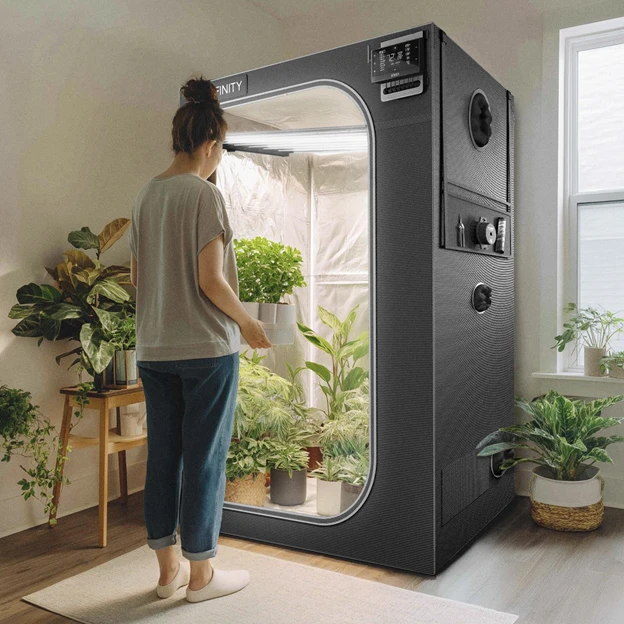
Humidity & Houseplant Care With Grow Tent Kits
Mastering humidity is just as important as light, soil, and nutrients when creating a healthy indoor growing environment.
When plants are grown inside a controlled space, especially a specialized indoor grow tent kit, humidity management can become more efficient, repeatable, and easier to maintain.
Understanding relative humidity, transpiration, dew point, and vapor pressure deficit can help you create conditions that better match the needs of the plants you're growing.
- Relative humidity (RH) measures how much moisture the air holds compared with its maximum capacity at the current temperature.
- Low humidity can increase water loss through transpiration.
- High humidity can slow transpiration and increase mold and fungal risk.
- Temperature and humidity work together, which is why RH can rise as air cools.
- Different houseplants can have very different humidity preferences.
- Airflow remains important even when plants prefer elevated humidity.
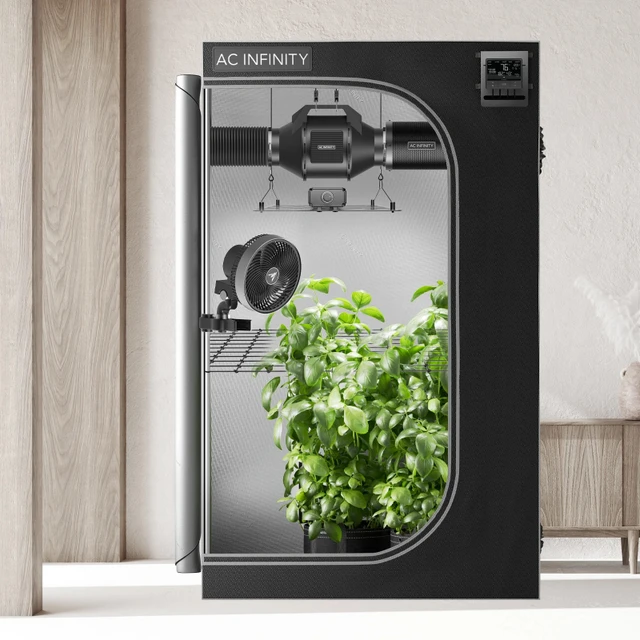
- A grow tent creates a smaller environment where humidity can be monitored and controlled more consistently.
Understanding Humidity for Plants
Humidity refers to the amount of water vapor in the air. For indoor growers, the most common measurement is relative humidity (RH).
Relative humidity describes how much moisture the air currently holds compared with the maximum amount it could hold at a given temperature, expressed as a percentage.
Transpiration
Plants absorb water through their roots and move it through their stems and leaves. Some water vapor escapes through small openings called stomata, supporting nutrient uptake, cooling, and internal water balance.
Saturation
As RH approaches 100%, the air approaches saturation. Evaporation slows and plant transpiration can be reduced.
Dew Point
The dew point is the temperature at which air becomes saturated and water vapor begins to condense. Surfaces below the dew point may collect moisture.
VPD
Vapor pressure deficit considers both humidity and temperature. Higher VPD represents drier air, while lower VPD represents more humid conditions.
Humidity doesn't operate independently. Temperature changes how much moisture the air can hold, which means temperature and RH should be considered together.
Why Humidity Matters for Indoor Plants
Indoor environments can become especially dry during winter or when heating and air conditioning systems are running. For plants adapted to more humid environments, these conditions can affect water balance and growth.
Excessive Water Loss
- Increased transpiration
- Drooping foliage
- Crispy or brown leaf edges
- Slower growth
- Leaf drop
Excess Moisture
- Reduced transpiration
- Greater mold risk
- Greater mildew risk
- Moisture within dense foliage
- Condensation concerns
Disease, Mold & Fungal Risk
Elevated humidity can create favorable conditions for fungal diseases such as mildew, mold, and rot, particularly when moisture remains on leaf surfaces or becomes trapped within dense foliage.
Condensation and other forms of persistent moisture can increase this risk, which is why humidity control should be paired with adequate airflow and ventilation.
Humidity Needs Vary by Plant
Different plants can respond very differently to the same environment.
Ferns, Calatheas, Marantas, Anthuriums, and many orchids typically prefer consistently elevated RH.
Peace lilies, Philodendrons, and Monsteras can benefit from moderate to higher humidity.
Succulents, cacti, and many plants adapted to arid environments generally tolerate lower RH and can experience problems when humidity remains high without adequate airflow.

Temperature Changes Humidity
Relative humidity changes with temperature because warmer air can hold more moisture.
When warm air cools, such as during nighttime temperature changes, RH can rise even if additional moisture hasn't been introduced into the environment.
Warmer air can hold more water vapor.
The amount of moisture the air can hold decreases.
The existing moisture represents a larger percentage of the air's capacity.
If a surface falls below the dew point, moisture can begin to condense.
Watch Nighttime Conditions
A daytime humidity level that appears manageable can rise as temperatures fall. Monitoring both temperature and RH can help identify conditions that may create condensation or excessive nighttime humidity.
Why Humidity Is Harder to Control in a Room
Maintaining stable humidity throughout a typical indoor room can be challenging because the growing environment is constantly influenced by the surrounding home.
Heating & Cooling
Heating and air conditioning can substantially change indoor humidity levels.
Seasonal Changes
Ambient RH can fluctuate with outdoor weather and seasonal conditions.
Temporary Solutions
Misting and pebble trays may provide localized or short-term moisture but don't maintain consistent RH throughout an entire growing environment.
Uneven Airflow
Poor circulation can create pockets of elevated humidity around foliage even when the overall room RH appears acceptable.
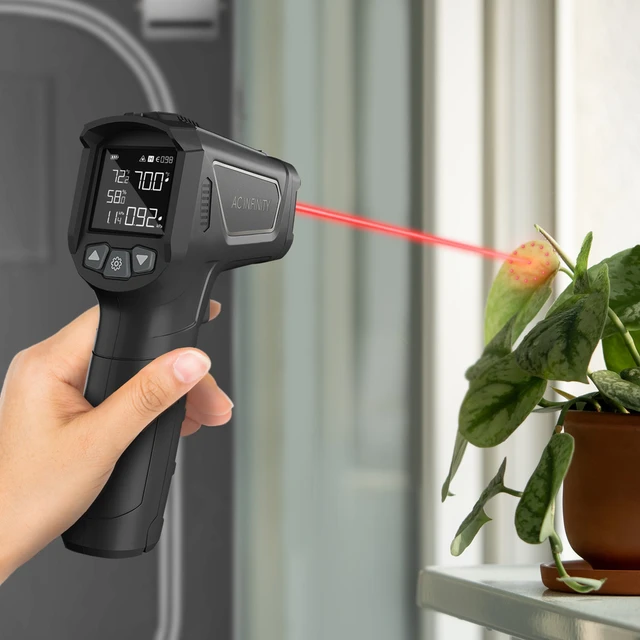
Monitoring can also become a challenge. Without reliable humidity and temperature measurements, growers are left guessing as conditions change throughout the day.
How Grow Tents Simplify Humidity Control
Indoor grow tents and environmental control equipment allow growers to manage temperature and humidity within a much smaller volume of air.
Instead of attempting to humidify an entire room or home, a grow tent creates a defined environment around the plants.
Smaller Air Volume
A humidifier can work within a much smaller area instead of attempting to change the humidity throughout an entire room.
More Predictable Changes
Lighting, ventilation, openings, and other environmental changes occur within a more defined growing space.
Easier Setpoint Control
A contained environment makes it more practical to maintain a target RH with fewer external influences.
- Grow tent or enclosed growing space
- Humidity monitoring
- Temperature monitoring
- Humidification when additional moisture is needed
- Ventilation and circulation
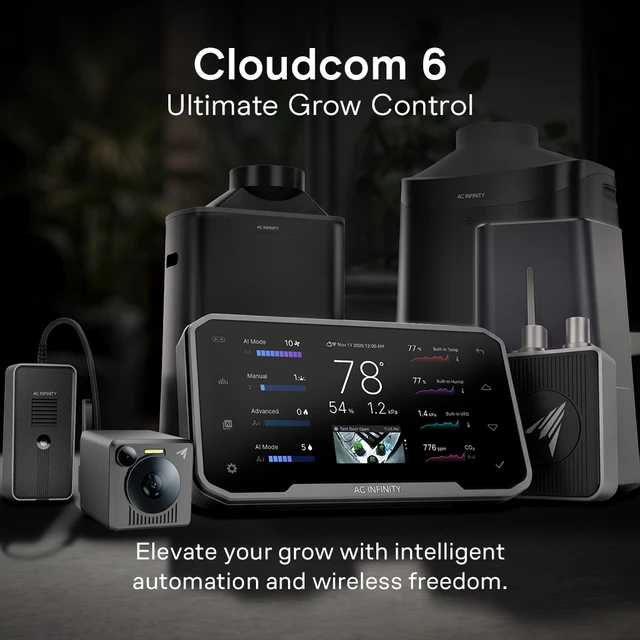
- Environmental automation where appropriate
Houseplant Humidity Guide
Humidity targets depend on the plant. The ranges below reflect the plant-specific guidance in this article and provide a quick reference for several popular houseplants.
| Plant | Humidity Guidance | Key Consideration |
|---|---|---|
| Monstera deliciosa | 60-75% RH | Lower RH may contribute to brown leaf edges or slower growth. |
| Calathea / Maranta | 70-80% RH | Require high humidity with good airflow to help manage fungal risk. |
| Ferns | Generally 60%+ RH | Dry air can contribute to browning tips and frizzy foliage. |
| Orchids | Many prefer 60-80% RH | Good ventilation remains important, particularly at night. |
| Succulents / Cacti | Lower RH preferred | High humidity combined with poor airflow can contribute to rot. |
| ZZ Plant / Snake Plant | Lower RH preferred | Avoid persistently humid environments with limited airflow. |
| Peace Lily / Pothos / Philodendron | 50-70% RH | Moderate to high humidity is favored, but these plants can be more forgiving of occasional dips. |
Monstera deliciosa
Monstera deliciosa prefers moderately high humidity, with the article identifying a range of approximately 60-75% RH. Lower humidity may contribute to brown leaf edges or slower growth.
Calathea, Maranta & Prayer Plants
These plants can be especially sensitive to dry air. The article identifies approximately 70-80% RH as a target range, paired with good airflow to help reduce fungal concerns.
Ferns
Boston ferns, Maidenhair ferns, and similar plants generally thrive with elevated humidity and consistent moisture. For many ferns, the article recommends avoiding RH levels below approximately 60%.
Orchids
Many orchids, particularly epiphytic varieties, prefer approximately 60-80% RH with adequate ventilation, especially at night.
While cooler nighttime temperatures and condensation can play a role for some species, excess moisture on foliage combined with stagnant air can contribute to rot.
Succulents, Cacti, ZZ Plants & Snake Plants
These plants generally prefer lower humidity, particularly in warmer conditions. Persistently high humidity with inadequate airflow can contribute to root or stem rot.
In a grow tent, humidifier use would therefore be reduced while drainage and airflow remain important.
Peace Lilies, Pothos & Philodendrons
These plants favor moderate to higher humidity but can be more forgiving than plants such as ferns or orchids when humidity temporarily falls.
The article identifies approximately 50-70% RH as a useful range for maintaining more consistent conditions.
Best Practices for Humidity Control
- Know what you're growing. Identify the plant and its growth stage, then determine an appropriate humidity and temperature target.
- Create a controlled environment. Use a high-quality grow tent or other enclosed growing space to reduce outside environmental influences.
- Monitor temperature and humidity together. RH changes as temperature changes, so both measurements are important.
- Maintain airflow. Use ventilation and circulation to help prevent stagnant pockets of humid air around foliage.
- Automate where appropriate. Environmental controls can help maintain more consistent conditions and reduce daily adjustments.
- Watch the plants. Brown or crispy leaf edges may indicate conditions that are too dry, while mold or rot may indicate excessive moisture.
- Keep equipment clean. Maintain humidifiers, ventilation equipment, and the surrounding growing environment.
Think of Humidity as Part of the System
Humidity control works best when it isn't treated as an isolated variable.
Changes how much moisture the air can hold and directly affects RH.
Influences transpiration, plant water balance, and moisture conditions around foliage.
Helps prevent stagnant pockets of humid air and persistent moisture around leaves.
Provides the information needed to recognize changes and maintain appropriate conditions.
Build a More Consistent Growing Environment
Humidity plays an important role in transpiration, water balance, plant growth, and the conditions that can encourage mold or fungal problems.
The ideal humidity level depends on the plants you're growing, which is why monitoring and environmental control matter.
Control humidity together with temperature and airflow to create a growing environment that better matches the needs of your plants.