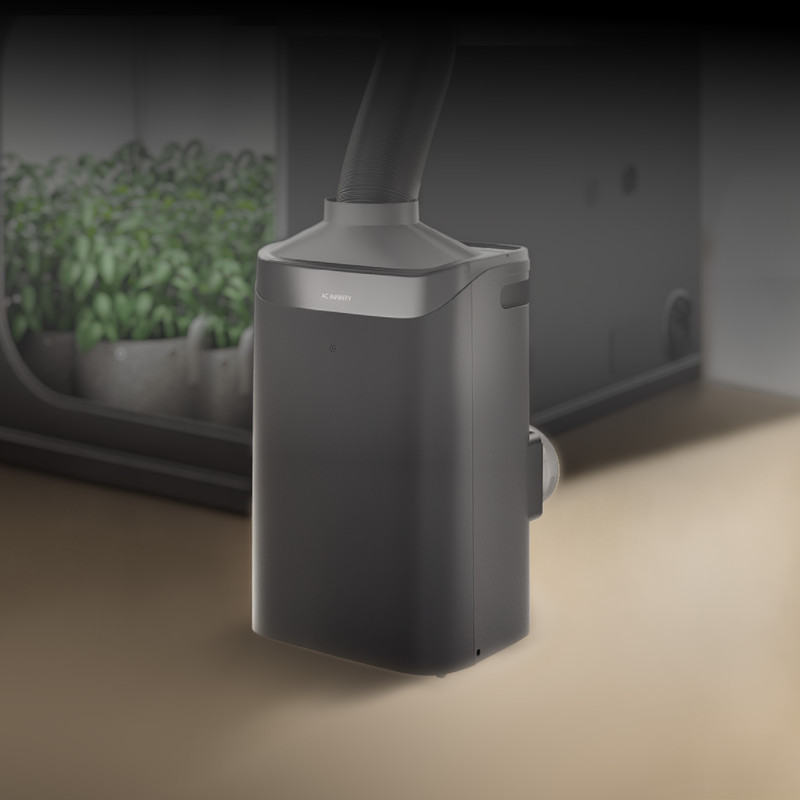
When A Tent Air Conditioner Starts To Feel Necessary
There's a shift that happens in a grow space that doesn't announce itself.
The numbers might still look fine at a glance. Nothing is screaming for attention. But the air feels heavier. The plants stop reaching the same way. Growth loses that momentum it had a few days ago.
That's when temperature stops being a background variable and starts setting the tone for everything else.
A grow tent air conditioner feels like the obvious move. Cool the space down, fix the problem.
But inside a controlled environment, heat's never just heat. It's tied to airflow, humidity, and how consistently your system responds to change.
You aren't just cooling a tent. You're trying to stabilize it.
- A grow tent air conditioner should do more than simply lower the temperature.
- Heat, humidity, and airflow work together inside a controlled grow environment.
- If the surrounding room is already too warm, ventilation alone may simply recycle hot air.
- Airflow remains critical even when active cooling is added to the grow space.
- The Terraform Series integrates heating, cooling, airflow, and dehumidification into one environmental control platform.
- Terraform 8 supports grow spaces up to 10x10 depending on conditions, while Terraform 12 expands capacity for environments up to 20x20 depending on conditions.
- Proper exhaust routing is essential because removed heat must be directed outside the grow space.
Why a Tent Air Conditioner Matters More Than Just Lowering Temperature
Dropping the temperature number doesn't automatically fix the environment.
Inside a tent, heat builds in layers. It rises, collects, and lingers around the canopy. At the same time, moisture hangs in the air longer than it should.
Without movement, everything starts to feel dense.
A real grow tent air conditioner strategy is less about brute-force cooling and more about pressure relief.
Warm air has to be removed before it continues building inside the grow environment.
Fresh air needs to move through the environment consistently.
Humidity needs to remain within a predictable range.
Air needs to keep moving across the entire canopy.
That's not a single solution. That's a coordinated system.
The Hidden Reason a Tent Air Conditioner Becomes Essential
Most tents don't run hot because something is "wrong."
They run hot because everything inside is working at the same time in a confined space.
Lighting
Lighting introduces steady heat into the grow environment.
Equipment
Grow equipment may operate continuously throughout the day.
Limited Air Volume
A grow tent contains a relatively limited volume of air for absorbing environmental changes.
Ambient Temperature
The temperature of the surrounding room influences conditions inside the tent.
Even efficient setups will build heat if it isn't actively managed.
That's why a tent can feel off even when nothing obvious is failing. The environment just starts drifting.
And once it drifts, plants feel it immediately.
When a Tent Air Conditioner Is the Only Real Solution
Sometimes airflow isn't enough.
If the room feeding your tent is already too warm, ventilation just recycles hot air.
That's when a tent air conditioner stops being optional and becomes necessary.
- Garages that trap heat throughout the day
- Attics with poor insulation
- Hot climates where ambient air stays elevated
- Spaces where temperature never drops into range
Cooling Becomes the Foundation
When the surrounding air is already too warm, increasing ventilation cannot solve the underlying temperature problem. In these situations, active cooling becomes the foundation and everything else works around it.
Why Airflow Still Defines How a Tent Air Conditioner Performs
Even with a tent air conditioner, airflow is what makes cooling effective.
Hot air rises and sits. Moisture collects. Without movement, you create pockets of inconsistent conditions that plants respond to immediately.
- Removes heat before it stacks
- Keeps fresh air moving through the canopy
- Prevents stagnant zones
- Supports humidity balance
Cooling without airflow is temporary. Cooling with airflow is control.
How the Terraform Series Redefines the Tent Air Conditioner Approach
Most cooling solutions feel reactive.
Something gets too hot, so you push cold air into the space and hope it balances out.
The Terraform Series approaches environmental control differently.
Instead of functioning like a traditional portable AC unit, the Terraform Series is built around stabilizing the entire grow environment through controlled heating, cooling, airflow, and dehumidification.
The goal is not simply lowering temperature. It's maintaining consistency across the entire system.
Controlled Cooling
Maintain temperature without relying on aggressive environmental swings.
Heating
Heating and cooling operate through the same primary ducting system.
Airflow
Cooling and heating work alongside steady airflow through the grow environment.
Dehumidification
Separate ducting pathways allow moisture removal to operate independently from primary heating and cooling airflow.
One Ducting System for Heating and Cooling
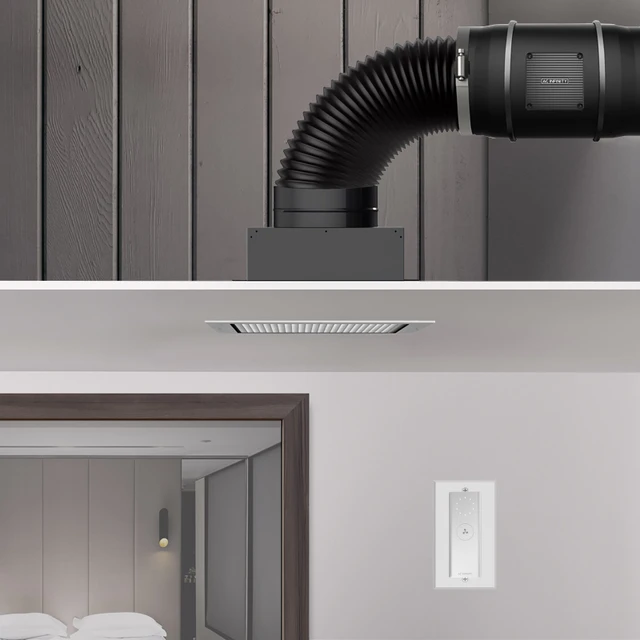
One of the biggest advantages of the Terraform Series is that both heating and cooling operate through the same ducting system.
Instead of manually reconfiguring separate pieces of equipment, the system intelligently switches between heating and cooling modes based on environmental conditions while maintaining steady airflow through the tent.
That creates a more stable environment without constantly chasing temperature changes.
Separate Dehumidification Airflow
The Terraform systems also utilize separate ducting pathways for dehumidification, allowing moisture removal to operate independently from the primary heating and cooling airflow.
As plant mass increases and humidity becomes more difficult to control, this separation helps maintain more predictable environmental balance throughout the grow cycle.
Rather than feeling like separate products, the Terraform 8 and Terraform 12 function as different capacity levels of the same environmental control platform.
Terraform 8 vs. Terraform 12
Terraform 8
Terraform 8 is designed for growers needing powerful environmental management in spaces up to 10x10 depending on overall conditions, lighting intensity, insulation, and ambient room temperature.
It fits especially well in mid-sized grows where heat loads are increasing but the environment still benefits from a more compact solution.
- 4x4 through 10x10 grow spaces depending on conditions
- Grow tents running high-powered LED systems
- Garages or warmer rooms with fluctuating temperatures
- Growers looking for stable long-term environmental automation
Terraform 12
The Terraform 12 expands on that same platform with increased capacity for larger and more demanding environments.
Instead of changing the overall environmental control philosophy, it extends the system's ability to handle higher heat loads, denser canopies, larger rooms, and more advanced environmental configurations.
- Large grow environments up to 20x20 depending on conditions
- Multi-light, high-output grow spaces
- Advanced sealed or semi-sealed grow rooms
- Dense canopy environments with elevated humidity loads
- Growers requiring higher-capacity environmental stabilization
The additional power and ducting flexibility of the Terraform 12 make it especially effective for larger grow operations, including setups utilizing neutral pressure environments or more complex airflow distribution layouts.
Don't Forget Exhaust Routing
In both systems, proper exhaust routing still matters.
Like any grow tent air conditioner, the removed heat must be exhausted outside the grow space through a nearby window or exterior outlet.
Heat Has to Go Somewhere
Without proper exhaust routing, excess heat can simply cycle back into the room and reduce overall cooling efficiency.
The real advantage of the Terraform platform is not just raw cooling power.
It's environmental stability.
Instead of constantly reacting to drifting conditions, the system works to maintain a balanced environment automatically.
And once the environment stabilizes, everything else becomes easier to manage.
Why Smaller Tents Benefit From a Tent Air Conditioner Strategy
Compact grow tents don't have much room for error.
A small increase in heat hits harder because there's less air to buffer it. Everything happens faster.
Temperature rises quicker inside a compact environment.
Humidity can shift more aggressively as conditions change.
Overall environmental conditions can drift faster.
That's why a tent air conditioner strategy becomes more noticeable in smaller spaces.
- Heat is managed before it builds
- Conditions stay within range longer
- The environment requires less constant adjustment
In tight environments, stability is everything.
When a Tent Air Conditioner Becomes Part of a Full System
The real difference in a grow comes down to how everything works together.
A grow tent air conditioner on its own solves part of the problem. But when it's integrated into a system, it changes how the entire environment behaves.
Maintain more consistent temperature throughout the grow environment.
Keep moisture conditions more balanced and predictable.
Maintain steady movement instead of allowing stagnant environmental pockets.
More predictable conditions support more predictable plant response.
At that point, you're not reacting anymore.
You're maintaining.
The Real Reason You Need a Tent Air Conditioner
It's not just about cooling.
It's about control.
A well-balanced grow environment:
- Holds temperature without constant adjustment
- Keeps humidity predictable
- Maintains consistent airflow
- Supports steady, reliable growth
That's what a tent air conditioner actually delivers.
Not just lower numbers. A stable system that works the way it should.
Build Around the Environment as a Whole
Temperature issues don't show up alone. They come with airflow problems, humidity swings, and instability that builds over time.
Trying to fix one piece without the others leads to constant adjustments.
A better approach is to build around the environment as a whole. With airflow in place and the Terraform Series handling controlled cooling, conditions stop drifting.
They hold.
And once they hold, everything else gets easier. Growth stabilizes. Plants respond the way you expect. The tent stops feeling unpredictable.
There is a point in a sealed or heavily lit grow tent where ventilation alone may not be enough to keep temperatures under control. When that happens, air conditioning becomes another tool for managing the environment alongside humidity and airflow. Once the conditions are measured, smart controllers helps bring the equipment under control, while grow tent climate control and humidifiers cover the broader climate-management picture. When cooling or moisture becomes the limiting factor, dehumidifiers gives you another way to manage the environment.