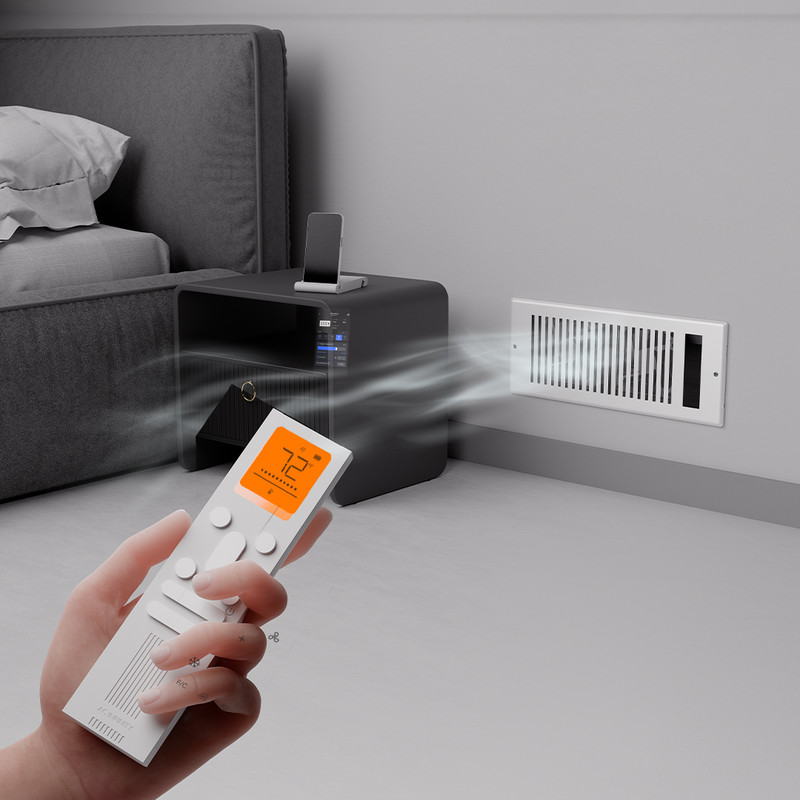
Air Register Booster Fan: A Simple Way to Improve Uneven Home Heating and Cooling
If one room in your home is consistently warmer or colder than the rest, the problem may not be your HVAC system. Long duct runs, room location, ductwork, insulation, and the layout of your home can all affect how much conditioned air reaches an individual register.
- A register booster fan can help when one or two rooms consistently receive less airflow than the rest of the home.
- Measure the actual register opening, not the outside dimensions of the grille, before choosing a booster fan.
- Match the booster fan to the register size rather than simply choosing the largest fan available.
- Booster fans work best for localized airflow problems and aren't a replacement for HVAC maintenance or repairs.
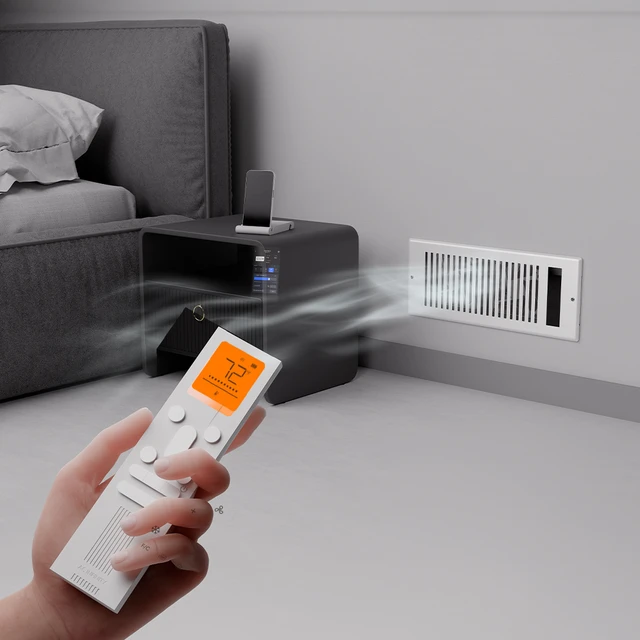
An air register booster fan is designed to help with this specific problem. Rather than changing your entire HVAC system, it adds airflow at an existing register to help move more conditioned air into the room.
But before choosing a booster fan, it's important to determine whether you actually need one, what size you need, and where it will work best.
When Does a Register Booster Fan Make Sense?
Register booster fans are most useful when your HVAC system is generally functioning normally, but one or two rooms consistently aren't getting enough airflow.
- Bedrooms at the end of long duct runs
- Home offices or converted rooms
- Rooms above garages
- Rooms with significant afternoon sun exposure
- Exterior rooms that become especially cold during winter
- Rooms that consistently feel different from the rest of the house
Look at the whole HVAC system first
If every room has weak airflow, a booster fan may not address the underlying problem. Blocked or undersized ducts, dirty filters, poor insulation, or HVAC equipment issues can all contribute to inadequate airflow and may require a different solution.
How to Measure a Register for a Booster Fan
One of the most important steps is measuring the register opening, rather than simply measuring the outside dimensions of the grille.
Before purchasing a booster fan:
- Access the register openingRemove or open the existing register if necessary.
- Measure the widthMeasure the width of the actual opening.
- Measure the lengthMeasure the length of the opening.
- Compare the dimensionsCompare those measurements with the booster fan's specified register dimensions.
For example, the AC Infinity AIRTAP series is available for several common register sizes, including 4 × 10, 4 × 12, 6 × 10, and 6 × 12 inches. The correct model needs to match the opening you're installing it into.
Don't rely on a register looking "close enough." A difference of an inch can mean the booster isn't designed for that opening.
Check the installation location
It's also important to check the installation requirements for the location. AC Infinity does not recommend installing its register booster fans on ceilings because of safety considerations.
Choosing the Right Size
Once you've measured the register, choosing the correct size becomes much simpler. The goal isn't to choose the largest booster available. Start by matching the booster to the dimensions of the actual register opening.
| Product | Size | Type |
|---|---|---|
| AIRTAP T4 White | 4" × 10" | Smart Register Booster Fan |
| AIRTAP T4 Bronze | 4" × 10" | Smart Register Booster Fan |
| AIRTAP T4 White | 4" × 12" | Smart Register Booster Fan |
| AIRTAP T4 Bronze | 4" × 12" | Smart Register Booster Fan |
| AIRTAP T6 White | 6" × 10" | Smart Register Booster Fan |
| AIRTAP T6 Bronze | 6" × 10" | Smart Register Booster Fan |
| AIRTAP T6 White | 6" × 12" | Smart Register Booster Fan |
| AIRTAP T6 Bronze | 6" × 12" | Smart Register Booster Fan |
4-Inch Registers
For compatible smaller residential registers, a 4-inch booster fan can provide additional airflow without taking up significant space.
The AC Infinity AIRTAP T4 is available for 4 × 10 and 4 × 12-inch registers. The 4 × 10 model, for example, uses dual fans and provides up to 140 CFM.
6-Inch Registers
Larger register openings can accommodate a 6-inch booster fan.
The AIRTAP T6 is available for 6 × 10 and 6 × 12-inch registers. Its larger format is designed to work with these wider openings while supplementing the airflow already coming from the HVAC system.
The important point isn't simply choosing the biggest fan available. Match the booster to the register opening first, then consider the airflow and features that make sense for the room.
Where Should You Place a Register Booster Fan?
A booster fan is intended to address a specific airflow problem, so placement matters.
A bedroom at the end of a long duct run may benefit more than a room located close to the HVAC equipment. Likewise, a room that gets significant afternoon sunlight may need additional conditioned airflow during certain parts of the day.
Think about which rooms consistently feel uncomfortable and where the HVAC system is already delivering air but isn't keeping up with the room's needs.
Focus on targeted airflow
The goal is targeted airflow, not installing booster fans on every register in the house.
How an AIRTAP Booster Fan Fits In
Once you've identified the right register and size, AIRTAP provides a way to add airflow without modifying the home's ductwork.
Depending on the model, features include adjustable fan speeds, timers, temperature-based controls, and smart-home connectivity. The temperature controls are designed around the temperature of the air coming through the register, rather than trying to maintain a specific room temperature.
That distinction is useful when setting up automatic operation. The booster can respond when your HVAC system begins supplying appropriately heated or cooled air instead of simply running continuously.
Compatible models can also connect to the AC Infinity app for additional programming and monitoring.
When a Booster Fan Isn't the Right Solution
A register booster shouldn't be viewed as a replacement for HVAC maintenance or repairs.
If airflow is weak throughout the house, or if a register has almost no airflow at all, investigate the underlying cause before adding a booster.
- Dirty HVAC filters
- Blocked or closed registers
- Damaged ductwork
- Poorly insulated ducts
- Undersized ductwork
- HVAC equipment problems
A booster fan is most appropriate when the existing system is functioning normally and the problem is localized airflow in a particular room.
Getting Started
If you're dealing with one room that's consistently too hot or too cold, start with the basics:
- Identify the problem roomDetermine whether the issue is isolated to one or two areas.
- Check the existing airflowMake sure the register is open and the HVAC system is operating normally.
- Measure the register openingUse the actual opening dimensions rather than estimating based on appearance.
- Choose the appropriate booster sizeMatch the booster to the register dimensions before considering other features.
- Consider placement and operationThink about when the room needs additional airflow and whether automatic controls would be useful.
Improve Airflow Where You Need It
Improving comfort throughout the home often comes down to moving air efficiently and choosing equipment suited to each space.
Start by identifying the problem room, checking the existing airflow, and measuring the actual register opening before choosing a booster fan.
Explore AC Infinity register booster fans, ducting, and home ventilation fans to learn more about the equipment and techniques discussed here.