Whole House Fans: A Smarter Way to Cool and Ventilate Your Home
When summer temperatures climb, most homeowners automatically reach for the air conditioner. But depending on the climate and time of day, running the AC isn't always the only way to keep a home comfortable. When outdoor temperatures drop below the temperature inside, a Whole House Fan can take advantage of that difference by moving hot indoor air out and bringing cooler outdoor air into the home.
- Whole House Fans move warm indoor air out while drawing cooler outdoor air into the home.
- They work best when outdoor temperatures are lower than indoor temperatures, particularly during cooler evenings and early mornings.
- AC Infinity CLOUDWAY models offer different airflow capacities and control options, including environmental programming and app connectivity on select models.
- A Whole House Fan can complement air conditioning rather than replace it, giving homeowners another cooling option when outdoor conditions are favorable.
Unlike a traditional air conditioner, a whole house fan doesn't rely on refrigeration to cool the air. Instead, it creates a large-scale exchange of indoor and outdoor air, helping flush out the heat that builds up throughout the day. For homes with warm afternoons and cooler evenings, this can be an effective addition to an overall cooling strategy.
AC Infinity's CLOUDWAY Whole House Fans take this straightforward concept and add modern features such as efficient EC motors, adjustable airflow, temperature-based programming, scheduling, and app connectivity on select models. The result is a whole-house ventilation system designed to make it easier to take advantage of cooler outdoor conditions.
What Are Whole House Fans?
Whole House Fans are ventilation systems designed to move large volumes of air through an entire home. Rather than cooling and recirculating the same indoor air like a traditional air conditioner, a whole house fan exhausts warm indoor air while creating a pathway for cooler outdoor air to enter.
This approach works particularly well when outdoor temperatures are lower than indoor temperatures. Imagine your home reaches 82°F during the afternoon while the temperature outside drops to 65°F after sunset. Even though the outdoor air is cooler, your floors, walls, furniture, and other surfaces may still be holding onto the heat accumulated throughout the day.
Opening appropriate windows and operating a whole house fan allows that stored heat to be flushed out. The fan exhausts warm air from the home while cooler outdoor air is drawn inside, helping bring the indoor temperature closer to the outdoor temperature.
Outdoor conditions matter
The effectiveness of a Whole House Fan depends heavily on the conditions outside. If it's hotter outdoors than it is inside, bringing that air into the house won't necessarily help. Whole House Fans work best when there is a meaningful temperature difference to take advantage of.
How Do Whole House Fans Work?
The principle behind a Whole House Fan is straightforward: hot air out, cooler air in.
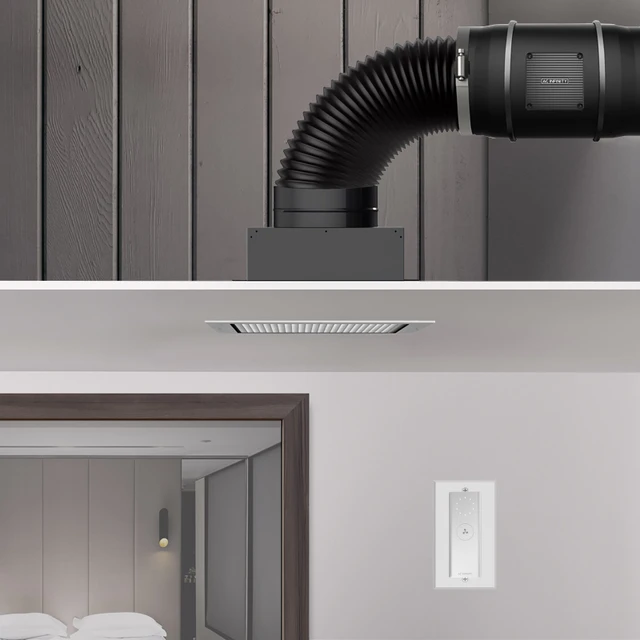
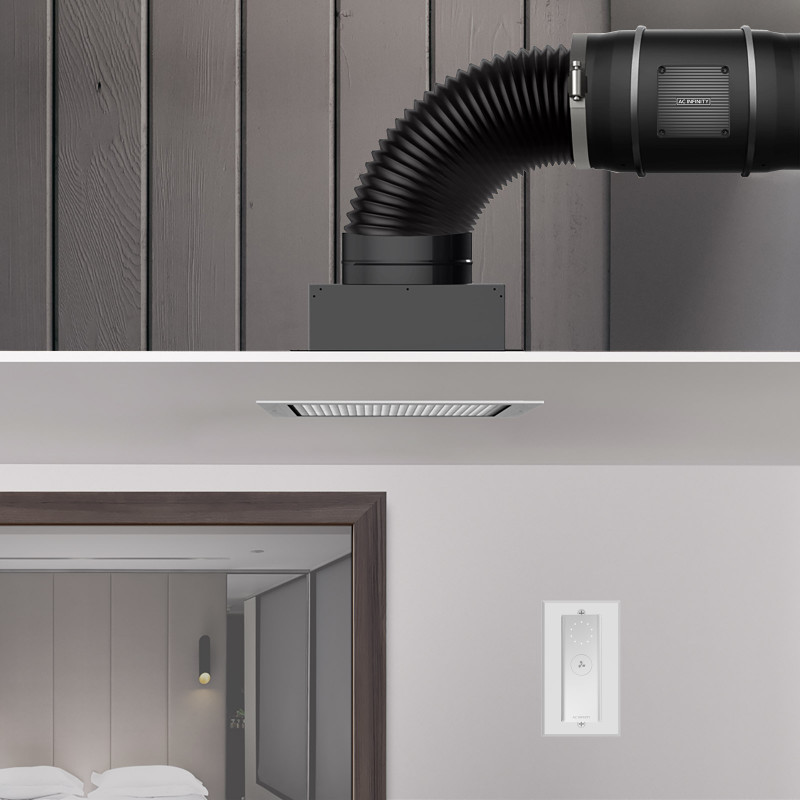
A whole house fan is typically installed in the attic or ceiling area and connected to an appropriate exhaust pathway. When the fan operates, it moves warm indoor air toward the attic and outdoors. As that air leaves the house, replacement air is drawn in through open windows or other suitable intake pathways.
This creates continuous air exchange throughout the home.
Open windows or other suitable intake pathways allow cooler outdoor air to enter the home.
The Whole House Fan creates airflow through the living space and moves warmer indoor air toward the attic.
Warm indoor air is moved through an appropriate attic exhaust pathway and out of the home.
The process is different from air conditioning. An air conditioner uses a refrigeration system to remove heat from indoor air and return cooled air to the room. A whole house fan instead relies on outdoor conditions, using naturally cooler air to help remove heat from the home.
That makes timing particularly important. Running a whole house fan during the hottest part of the afternoon may not provide the desired result if the outdoor air is warmer than the air inside. In the evening, however, the same system can become much more useful once outdoor temperatures fall.
AC Infinity CLOUDWAY Whole House Fans
For homeowners looking specifically for a Whole House Fan, AC Infinity's CLOUDWAY lineup is built around whole-home ventilation and attic installation. The lineup includes 10-inch and 12-inch models with different control options, allowing homeowners to choose between straightforward wireless speed control and more advanced automated programming.
| Model | Size | Maximum Airflow | Control | Best For |
|---|---|---|---|---|
| CLOUDWAY T10 | 10-Inch | Up to 1,201 CFM | Smart environmental controls | Automated whole-house ventilation |
| CLOUDWAY T12 | 12-Inch | Up to 1,250 CFM | Temperature, humidity, schedules, timers, cycles, WiFi and app control | Advanced environmental programming |
| CLOUDWAY S12 | 12-Inch | Up to 1,604 CFM | 10-speed wireless controller | Higher airflow with direct speed control |
CLOUDWAY T10
The CLOUDWAY T10 provides up to 1,201 CFM of airflow and uses an EC motor designed for efficient and quieter operation. It's rated at up to 48 dBA and is built for homeowners who want automated control over whole-house ventilation without relying on a basic fixed-speed fan.
CLOUDWAY T12
The CLOUDWAY T12 increases airflow capacity to 1,250 CFM and adds more advanced environmental programming. Its controller can respond to temperature and humidity conditions, while timers, cycles, schedules, and minimum-speed settings provide additional ways to configure operation. WiFi connectivity also allows control through the AC Infinity app.
CLOUDWAY S12
For homeowners who prefer more direct control, the CLOUDWAY S12 provides up to 1,604 CFM and includes a 10-speed wireless controller. This makes it possible to adjust airflow depending on how quickly you want to move air through the home and how much fan noise you're comfortable with.
The different models aren't about one system being right for every home. They're designed around different airflow requirements and control preferences, making it important to consider the size and layout of the home before choosing a model.
Smart Temperature Control
One of the advantages of a modern Whole House Fan is that you don't necessarily have to turn it on and off manually every time the weather changes.
The CLOUDWAY T-series can respond to temperature and humidity conditions, allowing homeowners to build ventilation schedules around the environment. Timers, cycles, minimum speeds, and scheduling provide additional control, while WiFi connectivity allows the system to be managed through the AC Infinity app.
This is especially useful during periods when outdoor temperatures change significantly between afternoon and evening. Rather than simply running the fan continuously, you can configure the system to operate when conditions are more favorable for ventilation.
Configure operation around your environment
Instead of treating the fan as a simple on-or-off appliance, you can configure its operation around the conditions inside and outside the home.
Whole House Fans vs. Air Conditioning
Whole House Fans and air conditioners approach cooling from completely different directions.
An air conditioner uses refrigeration to remove heat from indoor air. Because it doesn't depend on outdoor air being cooler, AC can provide cooling even when temperatures outside remain extremely high. Air conditioning can also be useful when humidity control is an important part of maintaining indoor comfort.
A Whole House Fan takes advantage of cooler outdoor temperatures by exhausting warm indoor air and replacing it with outdoor air.
That means the two systems don't necessarily have to compete with each other.
A homeowner might use air conditioning during the hottest part of the afternoon, when outdoor temperatures are too high for whole-house ventilation to be useful. Later in the evening, once outdoor temperatures fall below the indoor temperature, the Whole House Fan can be used to flush out accumulated heat.
For homes with large temperature swings between day and night, this gives homeowners another way to approach cooling rather than relying exclusively on mechanical cooling throughout the entire day.
Benefits of Whole House Fans
Move Hot Air Out
The primary purpose of a Whole House Fan is to move a large amount of air through the home. Instead of circulating air around a single room, the system is designed to create airflow throughout the house.
This makes it particularly useful when heat has accumulated inside multiple rooms during the day.
Take Advantage of Cooler Nights
Whole House Fans can be particularly useful in climates where evenings and early mornings are significantly cooler than afternoons. Once outdoor temperatures fall below indoor temperatures, the fan can help remove the heat stored inside the home.
Instead of simply letting the house slowly cool down on its own, the fan actively exchanges the warmer indoor air for cooler outdoor air.
Improve Air Exchange
Whole-house ventilation can also help replace stale indoor air with fresh outdoor air when outdoor conditions are appropriate. If a home feels stuffy after being closed up throughout a hot day, bringing in cooler outdoor air can help improve overall air movement.
The important factor is outdoor air quality and temperature. A whole house fan isn't something that needs to be operated under every weather condition. It's most useful when the outside environment is suitable for bringing air indoors.
Reduce Reliance on Mechanical Cooling
A Whole House Fan isn't a universal replacement for air conditioning. Instead, it gives homeowners another cooling option when outdoor conditions cooperate.
Using naturally cooler evening temperatures can help reduce the amount of time some homeowners need to rely exclusively on their AC, particularly during periods when daytime heat gives way to significantly cooler nights.
Whole House Fans and Attic Ventilation
The attic plays an important role in a whole-house ventilation strategy. During sunny weather, attic spaces can become extremely hot, making proper airflow and exhaust pathways particularly important.
CLOUDWAY systems are designed for attic installation and use insulated dampers that close when the fan isn't operating. This helps limit unwanted airflow between the attic and living space when the system is inactive.
Proper installation still matters. A Whole House Fan needs an appropriate installation location and adequate pathways for air to enter and leave the home. Homeowners should make sure their attic has appropriate ventilation for their particular installation and follow the applicable installation requirements.
The fan itself is only one part of the airflow equation. The home needs a suitable intake and exhaust path for the system to operate as intended.
When Should You Run a Whole House Fan?
Timing is one of the most important factors when using a Whole House Fan.
Outdoor Temperature < Indoor Temperature
Run the fan when outdoor temperatures are lower than indoor temperatures.
A typical cooling strategy might look something like this:
Keep windows closed and use air conditioning if necessary while outdoor temperatures are still high.
Once outdoor temperatures fall below indoor temperatures, open appropriate windows and operate the Whole House Fan.
Continue ventilating while outdoor conditions remain favorable.
Close windows before outdoor temperatures rise again.
This isn't a universal schedule because every climate and home is different. The important part is understanding the temperature relationship between the inside and outside of the house.
If the air outside is cooler, a Whole House Fan can take advantage of it. If it's hotter outside, the strategy changes.
How to Choose a Whole House Fan
Choosing a Whole House Fan comes down to more than simply looking for the biggest CFM number. Consider how much air the home needs, how you want to control the fan, and where the system will be installed.
- Consider Airflow Capacity CFM, or cubic feet per minute, measures how much air the fan can move. The CLOUDWAY lineup ranges from approximately 1,200 CFM to more than 1,600 CFM depending on the model. The appropriate airflow depends on factors such as the home's size, layout, attic configuration, and desired ventilation strategy.
- Think About Controls If you want straightforward manual adjustment, a model such as the CLOUDWAY S12 with its wireless speed controller provides direct airflow control. If you'd rather automate operation around environmental conditions, the CLOUDWAY T-series provides temperature and humidity programming along with timers, schedules, cycles, and app connectivity.
- Consider Noise Fan noise is another factor worth considering, particularly because whole-house fans are installed in residential environments. CLOUDWAY systems use PWM-controlled EC motors designed for efficient airflow and quieter operation, with the T10 rated at up to 48 dBA.
- Plan the Installation A Whole House Fan needs more than just a suitable fan location. You also need appropriate pathways for air to enter and leave the home. CLOUDWAY systems are designed for attic installation and include components such as ducting, clamps, grilles, and insulated dampers depending on the model. Proper installation helps ensure that the system can move air effectively.
Whole House Fans and Other AC Infinity Home Comfort Products
Whole-house ventilation isn't designed to solve every airflow problem in a home.
A CLOUDWAY Whole House Fan is designed to move large volumes of air through the entire home when outdoor conditions are appropriate.
If one room isn't receiving enough air from an existing HVAC register, an AIRTAP Register Booster Fan can provide a more localized airflow solution.
AC Infinity Through Wall Fans are designed to move air between adjacent rooms when temperature differences exist between spaces.
These products serve different purposes from a Whole House Fan, but they can complement a broader home comfort strategy. The important thing is matching the equipment to the problem instead of expecting one ventilation product to handle every situation.
Are Whole House Fans Worth It?
For the right home and climate, a Whole House Fan can be an effective addition to a home's cooling and ventilation strategy. They're particularly useful in areas where hot afternoons are followed by cooler evenings, allowing homeowners to take advantage of naturally cooler outdoor air.
The key is understanding what a Whole House Fan can and can't do. It isn't a replacement for air conditioning in every climate or weather condition, and it won't provide the same type of cooling when outdoor temperatures remain high. Instead, it provides another option for removing accumulated indoor heat when the conditions are right.
AC Infinity's CLOUDWAY systems bring this established approach to whole-house ventilation together with modern controls and efficient EC motor technology. Depending on the model, homeowners can get adjustable airflow, temperature and humidity programming, scheduling, wireless controls, and app connectivity.
A Smarter Approach to Whole-Home Airflow
Ultimately, the idea behind a Whole House Fan is remarkably simple: when the air outside is cooler than the air inside, use that temperature difference to your advantage.
A CLOUDWAY Whole House Fan gives cooler outdoor air a path into the home while giving accumulated indoor heat somewhere to go.
Improving comfort throughout the home often comes down to moving air efficiently and choosing equipment suited to each space.
For homeowners looking for a more flexible approach to summer cooling, that's a pretty useful tool to have.