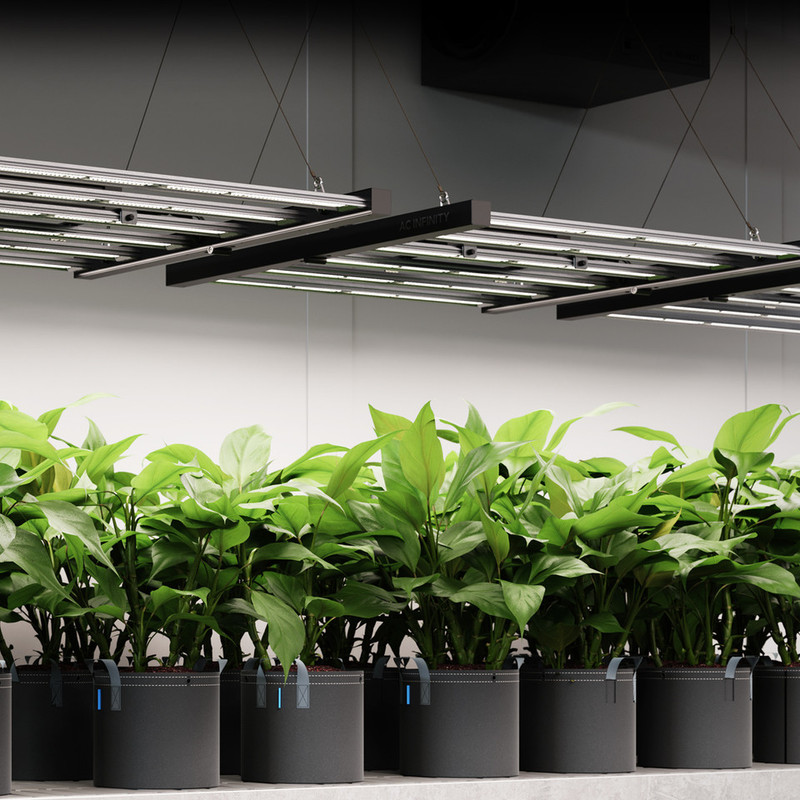
Why It’s Time to Switch to LED Grow Lights If You Haven’t Yet
Many grow lights are LEDs, but even in the modern era, not all are. There are still incandescent and HID lights that are used as grow lights.
However, the relative advantages they offer are diminishing before the far-reaching performance of LED lights.
If you're not using LED grow lights yet, here's why you should be.
- LED grow lights can operate for tens of thousands of hours.
- They use less energy than many traditional lighting technologies.
- Solid-state construction makes LEDs physically durable.
- Modern LEDs are available in a wide range of spectrums and configurations.
- LEDs do not contain the heavy metals associated with some HID lamps.
- Standard LEDs do not produce UV unless specifically designed to do so.
- They reach full brightness immediately and can provide directional light.
- Lower energy use and less frequent replacement can reduce long-term operating costs.
They Last Longer
One of the best advantages of LED grow lights is that they last longer not just than incandescent lights, but than HID lights like HPS and MH lamps.
This lifespan is comfortably ten times longer than even the best incandescent lights and easily rivals HID grow lights.
- Lower replacement costs
- Improved reliability
- Less maintenance
- Fewer interruptions to your growing system
Plus, LEDs don't suddenly burn out like incandescent bulbs. They get dimmer when they start to go, so you know when to replace them.
They're More Energy Efficient
LED grow lights operate with much lower voltage than other types of grow lights, which considerably improves their energy efficiency and lowers operating costs.
Better energy efficiency means more than lower power use. It can also help reduce the ongoing cost of running your indoor grow.
They Don't Shatter
LED grow lights, like other LEDs, are SSLs, or solid-state lights, with an emitter encased in a lens, typically made of a solid resin epoxy or another durable synthetic material.
They are rarely, if ever, made of glass. As a result, they are physically much more durable than other types of lightbulbs.
Solid-State Design
LEDs use an emitter housed within a durable lens rather than relying on a traditional fragile bulb.
Less Fragile
Their construction makes LEDs less susceptible to the shattering associated with glass bulbs.
Physical Durability
LEDs can withstand rough handling, jostling, or drops while continuing to operate.
They Do What You Need
There was a time when options in LED grow lights were somewhat limited.
Today, there is a great deal of variety in the modern market, from full-spectrum lights to colored lights and everything in between.
That variety gives growers more options when matching lighting to a specific indoor growing setup.
They're More Environmentally Friendly
LED grow lights, unlike HID lamps such as high-pressure sodium and metal halide lamps, do not contain heavy metals.
This makes them more environmentally friendly, not to mention that it's far easier to properly dispose of them.
Do not contain the heavy metals associated with HID lamps.
High-pressure sodium and metal halide lamps can contain heavy metals.
No UV Emissions, Unless That's Needed
Some other types of grow lights release UV emissions that can be harmful to human health.
LED grow lights don't, unless they are specifically a category of UV-emitting LEDs, which do exist.
UV LEDs Are Different
Standard LED lighting should not be confused with LEDs specifically designed to emit ultraviolet light. UV-emitting LEDs are their own category.
Reliability in All Conditions
In both extreme heat and extreme cold, LED grow lights start up and reach full brightness immediately.
They are also not sluggish in extreme conditions as some other types of lights are.
LED lighting starts immediately when activated.
LEDs reach full brightness without requiring a lengthy warm-up period.
They are not sluggish in extreme conditions in the same way some other lighting technologies can be.
Optional Directionality
LED lights can emit light in all dimensions, or they can be directional.
That directionality can improve the performance of the light, especially when it is being used as a grow light.
When light can be directed where it is needed, more of the output can be focused toward the growing area.
They Probably Cost Less in the Long Run
Because LED lights are more energy efficient and need to be replaced far less frequently, they can end up being more economical in the long run despite a potentially higher upfront cost.
LED grow lights may initially cost more than some traditional alternatives.
Improved efficiency can reduce ongoing operating costs.
Long operating life means lights do not need to be replaced as frequently.
This is the bottom line: LED grow lights offer potentially better value on top of better performance.
If your indoor growing setup doesn't currently leverage LED grow lights, switching can provide benefits across efficiency, reliability, durability, and operating life.
The LED Grow Light Advantage
Long Lifespan
LEDs can operate for tens of thousands of hours, reducing how frequently grow lights need to be replaced.
Energy Efficiency
Lower energy requirements can reduce the ongoing cost of operating an indoor grow.
Durability
Solid-state construction eliminates much of the fragility associated with traditional glass bulbs.
Lighting Options
Modern LEDs are available in full-spectrum, colored, and other configurations for different growing applications.
Immediate Output
LEDs reach full brightness immediately instead of requiring a lengthy warm-up period.
Directional Lighting
LED technology can direct light toward the area where it is needed.
Where to Learn More About High-Performance LED Grow Lights
Want to learn more about high-performance LED grow lights and what sorts of advantages they can offer you, or are you ready to completely overhaul your indoor growing setup?
AC Infinity carries a wide range of indoor growing accessories, including grow lights.
Choosing the right setup means matching light output, coverage, and environmental control to your growing space.
Why Make the Switch to LED?
Modern LED grow lights combine long operating life, energy efficiency, durability, lighting flexibility, and reliable performance in one technology.
While the upfront investment may be higher than some alternatives, reduced energy consumption and less frequent replacement can improve their long-term value.
For indoor growers, the advantage of LED isn't one individual feature. It's how efficiency, lifespan, durability, and lighting performance work together.