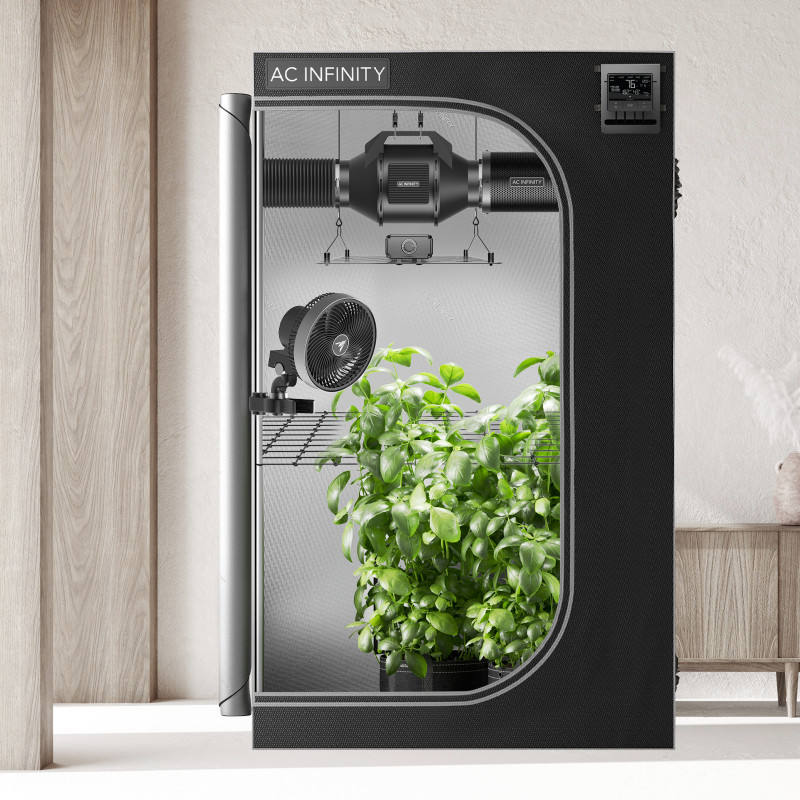
Indoor Growing: A Short Guide to Getting Started
Thinking about getting into the immensely gratifying hobby of growing indoor plants?
Whether you intend to grow flowers, food, or herbs, growing indoors differs considerably from growing outside. Instead of relying on outdoor conditions, you are responsible for creating and maintaining the environment your plants need.
This guide covers the essential equipment you'll need, along with the growing conditions and environmental factors you'll need to control for success.
- Create a controlled growing space with an appropriately sized grow tent.
- Choose containers and growing media that support healthy root development.
- Provide heating, cooling, ventilation, and appropriate LED grow lighting.
- Supply nutrients based on the plant and its current growth stage.
- Use controllers to simplify monitoring and automation where appropriate.
- Manage temperature, humidity, pH, irrigation, nutrients, light, and airflow.
What You Need to Grow Plants Indoors
Some indoor growers simply start seeds indoors before transferring their plants outside. Others commit to growing plants from seed to maturity completely indoors by creating and maintaining the conditions those plants need to thrive.
If you're planning a complete indoor grow, you'll want most, if not all, of the following.
Grow Tent
While some growers build and maintain entire grow rooms, self-contained grow tents are generally more practical, versatile, and affordable.
Grow tents are designed to help maintain temperature and humidity, accommodate HVAC and airflow equipment, and provide reflective interiors that help direct light toward your plants.
Growing Containers
Plants can be grown indoors in hard-sided vessels, but many indoor growers prefer fabric pots because they are breathable, lightweight, and allow for air pruning.
They also fold down for convenient storage when they aren't being used.
Growing Media
Unless you're growing hydroponically, you'll need a potting medium to support the roots while providing airflow, moisture, and nutrient delivery.
Commercial growing media can include organic components such as humus, coconut fiber, and moss that help balance moisture retention and root aeration.

HVAC Controls
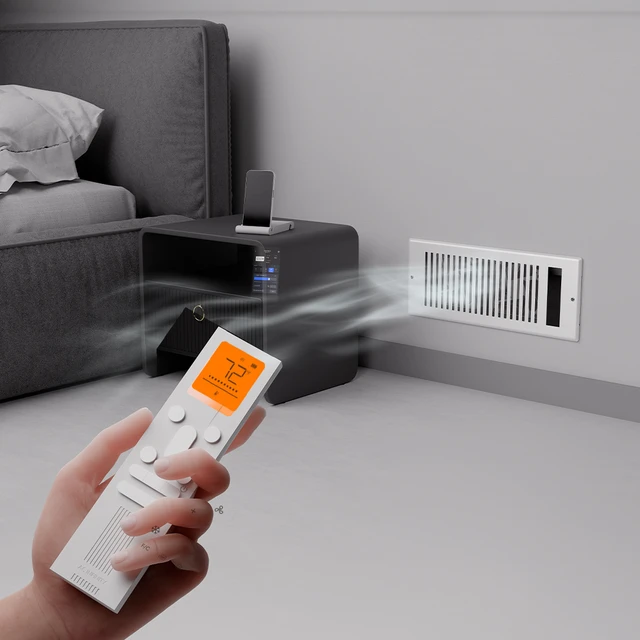
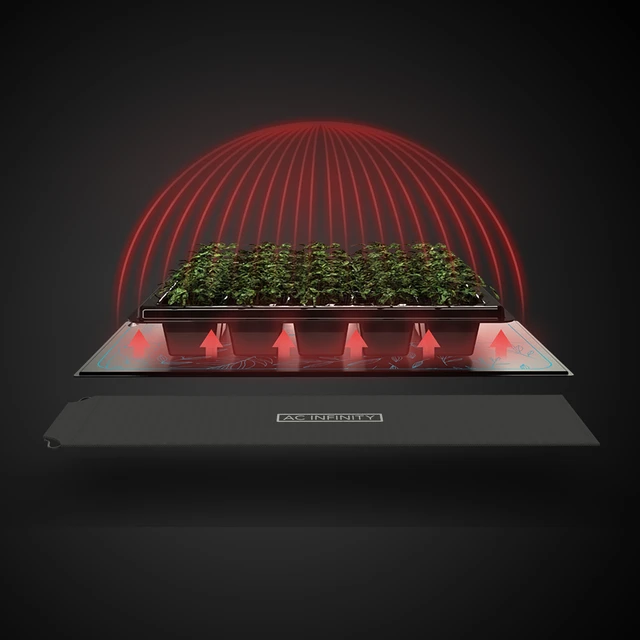
You'll need a way to heat and cool the grow environment as conditions change so you can maintain appropriate temperatures for your plants.
LED Grow Lights
Providing the appropriate amount and spectrum of light based on the species and stage of growth is one of the most critical parts of maintaining plant health.
LED grow lights are powerful, directional, energy efficient, and longer lasting than incandescent and HID grow lights.
Fertilizer
Nitrogen, phosphorus, and potassium are among the primary nutrients needed to support healthy foliage, roots, and flowering.
The required concentrations depend on the cultivar and its current growth stage. Fertilization may also be necessary in containers to prevent the growing medium from becoming depleted.
Controllers
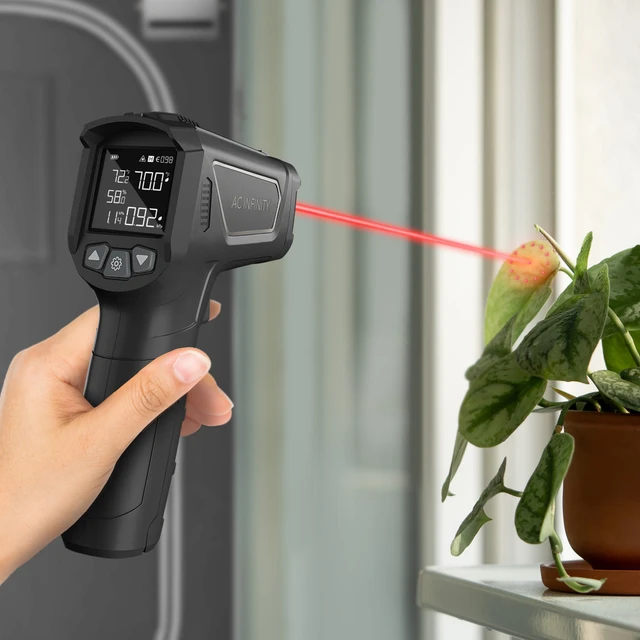
Controllers aren't absolutely necessary, but automating and monitoring conditions such as temperature, humidity, lighting schedules, and other grow parameters can make it much easier to maintain a consistent environment.
Plant Care Tools
Depending on what you're growing, you may need stakes, supports, ties, twine, pruners, trimmers, and other accessories for supporting, training, pruning, and maintaining your plants.
Think of the Grow as a System
The tent creates the growing space, but lighting, containers, climate equipment, nutrients, and controls work together to create the conditions your plants actually experience.
What You Need to Control
Having the right equipment is only part of indoor growing.
In addition to an appropriately sized grow tent, LED grow lights, fabric pots, and other accessories, you need to understand the environmental factors that influence plant health.
Temperature
Temperature can impact how quickly a plant grows and how quickly it reaches its flowering stage.
Plants exposed to temperatures above or below their preferred range can suffer. Some plants also prefer higher daytime temperatures and cooler nighttime temperatures, increasing the value of automated environmental control.
Humidity
Humidity levels can significantly influence plant health. Some species and cultivars flourish in consistently arid conditions, while others thrive with elevated humidity.
A grow tent combined with appropriate climate equipment can help maintain humidity around the conditions your plants require.
Soil pH
The acidity or alkalinity of the growing medium can impact a plant's ability to absorb nutrients.
Improper pH can prevent plants from properly accessing nutrients even when fertilizer is being supplied at an appropriate concentration.
Irrigation
How frequently you water your plants, along with how thoroughly you allow the growing medium to dry between watering, can affect plant health.
Growing indoors, particularly in a grow tent, allows for more precise control over watering and growing-medium conditions.

Nutrient Delivery
Some plants are heavy feeders while others require less fertilization.
Not fertilizing adequately can stunt growth and cause blossom drop, while excessive fertilizer can burn or even kill the plant.
Light Exposure
How much light a plant needs is largely determined by the cultivar and can change throughout the growth cycle.
Providing enough light is critical for preventing etiolation and supporting healthy development.
Air Purity & Circulation
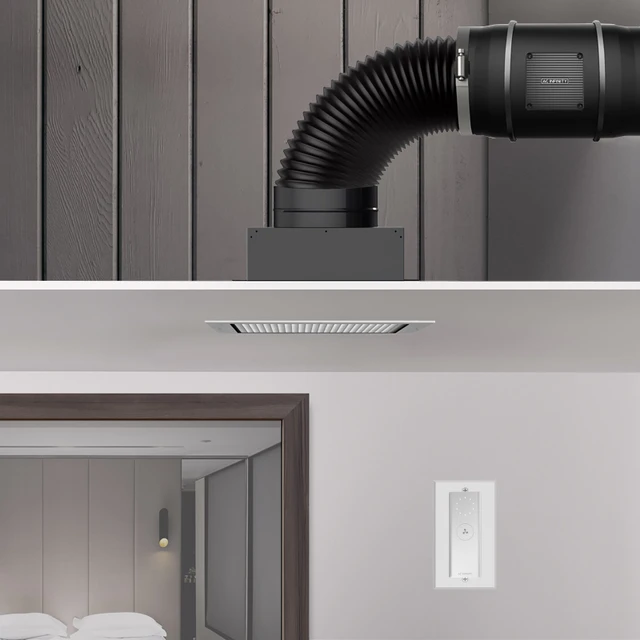
An indoor grow tent equipped with adequate ventilation gives you greater control over how clean, fresh, and well-circulated the air around your plants remains.
How an Indoor Grow Works as a System
The goal isn't simply to collect individual pieces of growing equipment. Each component supports another part of the environment.
The grow tent establishes the controlled environment around your plants.
Lighting, containers, growing media, water, and nutrients support plant growth.
Temperature, humidity, and ventilation shape the conditions inside the tent.
Monitoring and automation can help keep those conditions more consistent.
Indoor Grow Setup Checklist
- Appropriately sized grow tent
- Growing containers or hydroponic system
- Growing medium if needed
- LED grow lights
- Heating and cooling equipment
- Ventilation and airflow
- Water and irrigation plan
- Appropriate fertilizer
- Environmental monitoring
- Plant support and trimming tools
The equipment creates the environment, but the needs of the plant determine how that equipment should be used.
Build Your Indoor Growing Environment
This guide isn't specific to a single species or cultivar. Instead, it provides the groundwork for creating an indoor growing environment that gives you greater control over the conditions surrounding your plants.
What you ultimately need will depend on what you're growing, how much space you have available, and the conditions required by the plant.
A well-planned indoor garden brings together the growing space, lighting, airflow, root zone, and environmental controls into one coordinated system.