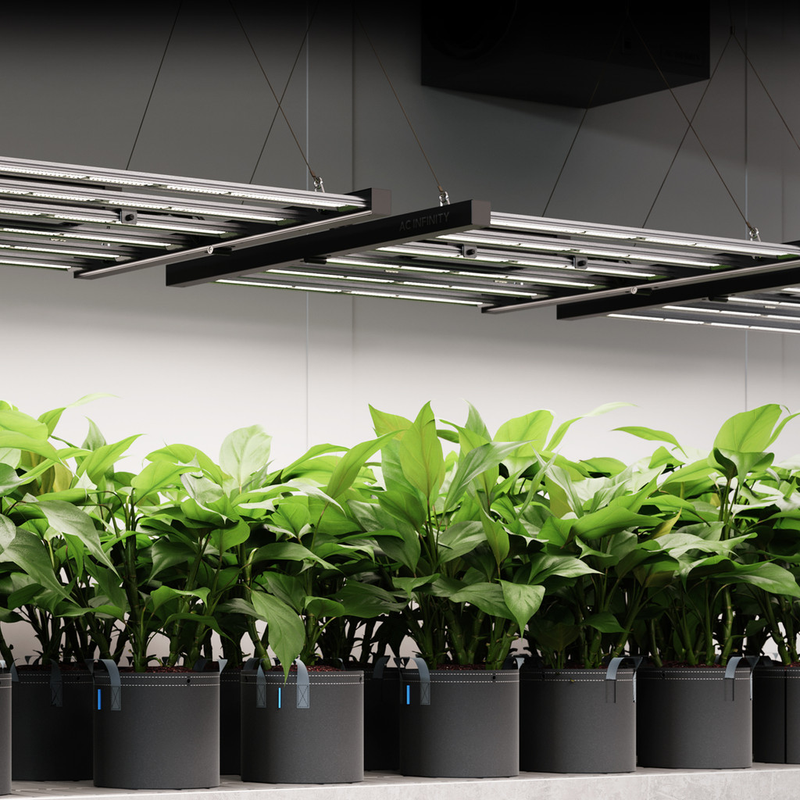
The LED Grow Light: The Backbone of Indoor Growing
There's a moment, usually somewhere between your third late-night YouTube deep dive and your first electricity bill that makes you physically recoil, when you realize indoor growing isn't just a hobby.
It's a system. A vibe. A low-key obsession that starts with a single plant and ends with you checking on them like they're part of your routine.
Right in the middle of that realization sits the one thing that quietly determines whether your setup thrives or stalls: the LED grow light.
An LED grow light isn't just another piece of equipment. It controls how your plants grow, how much energy you use, and how stable your environment actually is.
Whether you're building your first setup or upgrading, choosing the right LED grow light for indoor plants can make or break your results.
- LED grow lights provide full spectrum output while using less energy and producing less heat than older lighting systems.
- Plants respond to light wavelengths, not simply how bright a grow light appears to us.
- Full spectrum lighting supports both vegetative and flowering growth.
- LEDs can reduce the heat load placed on ventilation and environmental control systems.
- Quality LED grow lights are designed to operate for tens of thousands of hours.
- The best grow light is not automatically the highest-wattage option. Coverage, efficiency, spectrum, durability, and heat management all matter.
- Matching the grow light to the actual grow space is more important than simply chasing larger specifications.
What Is an LED Grow Light and Why Does It Matter?
An LED grow light is a lighting system designed to mimic the spectrum of sunlight that plants need for photosynthesis.
Unlike traditional grow lights, modern LED grow lights can deliver full spectrum output while using less energy and producing less heat.
That matters more than most growers realize.
Your plants don't care about brightness the way you do. They care about wavelengths.
Supports vegetative growth and plant development.
Supports flowering as plants move through later stages of growth.
A full spectrum LED grow light delivers a balance of light that can support plants throughout the grow cycle.
You are not just lighting your plants. You are building their environment.
LED Grow Light vs. HPS: What's the Real Difference?
Before LED grow lights took over, indoor growers were basically running miniature suns inside their homes.
High-pressure sodium lights blasted heat like a space heater with an ego.
Metal halides had their moment too, but they were not subtle. Everything ran hot. Everything pulled serious power. Everything needed extra gear just to stop your grow from turning into a sauna.
You didn't just run a light. You managed heat. You engineered airflow. You kept one eye on your breaker panel like it might betray you.
People made it work, sure. But it was clunky and inefficient, and honestly, a little exhausting.
Then LED grow lights showed up and made the whole setup feel smarter.
| LED Grow Lights | HPS Grow Lights |
|---|---|
| Lower energy consumption | High energy usage |
| Full spectrum output | Limited spectrum control |
| Lower heat production | High heat output |
| Longer lifespan | Shorter lifespan |
| More precise control | Less spectrum control |
If you are comparing LED vs. HPS grow lights, the biggest difference comes down to efficiency and control.
LEDs give you more usable light with fewer downsides.
Do LED Grow Lights Save Electricity?
Let's talk about the part that everybody thinks about.
Electricity.
Running older grow lights is like leaving your oven on all day and pretending it's normal. It adds up quickly, and it doesn't stop.
LED grow lights flip that completely. They use less power while still delivering strong output.
LED grow lights use less electricity than older lighting systems.
Efficiency allows LEDs to continue delivering strong lighting performance.
Over time, the difference can show up in your electricity costs.
It's not hype. It's efficiency.
The upfront cost might be higher, but the long-term savings are real. If you are running multiple tents or scaling up, it becomes obvious pretty fast.
Do LED Grow Lights Give Off Heat?
Heat is the silent problem.
If you have ever walked into a grow space and felt like you opened a dishwasher mid-cycle, you already get it.
Heat stress does not always show up in dramatic ways.
LED grow lights run cooler. Not cold, but noticeably cooler than older systems.
That means less strain on your ventilation, more stable temps, and fewer variables to fight.
It also means you can run your lights closer to the canopy without frying your plants. If you know how to use that properly, it makes a real difference.
LEDs Still Produce Heat
Running cooler doesn't mean running cold. Heat management still matters, but LEDs can reduce the thermal load your ventilation and climate-control systems need to manage.
You are not just saving energy. You are creating a more stable environment.
How Long Do LED Grow Lights Last?
Nobody gets into growing because they enjoy replacing equipment.
Traditional bulbs burn out fast. Even before they die, their output drops off. Your plants are getting less light even if everything looks fine.
LED grow lights are built to last.
We're talking tens of thousands of hours.
You install them, run them, and they keep going.
- Less maintenance
- Consistent performance over time
- Lower long-term costs
You set it up once and it keeps delivering.
What Makes the Best LED Grow Light for Indoor Plants?
Here's the part nobody wants to hear when they're deep in product pages at 1 AM: not all LED grow lights are built the same, and specs alone won't save you from buying the wrong one.
The "best LED grow light" isn't the one with the flashiest marketing or the biggest wattage flex.
It's the one that actually works with your setup instead of fighting it.
Full Spectrum Output
Your plants need different types of light depending on whether they're growing or flowering. A full spectrum LED grow light supports both without forcing you to swap equipment halfway through your grow.
Energy Efficiency
A good LED grow light turns more electricity into usable light instead of bleeding it off as heat, helping reduce wasted energy.
Build Quality
Quality components and consistent output matter when the light needs to perform reliably throughout the grow cycle.
Coverage Area
A properly matched light helps avoid uneven growth, wasted energy, and plants competing for adequate light.
Heat Management
Even LEDs produce heat. Good heat management helps maintain a more stable environment without constantly compensating through airflow.
At the end of the day, the best LED grow light for indoor plants is not about chasing the biggest numbers.
It is about balance. The kind that makes your grow feel dialed instead of chaotic.
The kind where everything just works and you are not troubleshooting your way through every stage.
Why LED Grow Lights Work Better in Small Grow Spaces
Let's be honest. Most indoor growers are not operating out of some massive, perfectly engineered warehouse.
It's a tent in the corner. A closet that used to hold clothes. A spare room that slowly turned into something else.
Space is tight, and when space is tight, efficiency stops being optional.
This is exactly where an LED grow light pulls ahead.
They are compact, low-profile, and built to push light exactly where it needs to go. Not blasting your walls. Not lighting up empty corners. Just focused output hitting your plants where it actually matters.
Grow Tents
Compact lighting can fit naturally into enclosed grow environments where space is limited.
Small Rooms
Efficient lighting helps reduce unnecessary heat and wasted light in smaller indoor spaces.
Multi-Plant Setups
Proper coverage helps distribute usable light across multiple plants within the grow area.
When everything is tighter, everything becomes easier to manage.
You are not fighting your environment. You are shaping it.
A dialed-in space like that is easier to control, easier to scale, and way easier to optimize once you know what you are doing.
Are LED Grow Lights Worth It?
Yes.
Long answer: if you have ever struggled through a grow that felt harder than it should have been, then yes, absolutely.
LED grow lights clean up a lot of the chaos that comes with older setups.
- Lower energy use
- Less heat to manage
- Longer operating life
- Full spectrum output
- Fewer environmental variables to fight
- More control throughout the grow cycle
And then there's the spectrum control. This is where things really click.
A good LED grow light gives your plants what they actually need at each stage, instead of forcing you to work around limitations.
But the real reason they are worth it is simpler than all of that.
You stop spending your time fixing problems. You start spending your time growing.
If you are serious about indoor growing, upgrading to a high-quality LED grow light is one of those decisions that just makes everything else easier.
Choosing the Right LED Grow Light for Your Setup
This is where people usually get it wrong.
They chase specs. Bigger numbers. More power. Something that looks impressive on paper but makes no sense for their actual setup.
Choosing the right LED grow light is less about going big and more about getting it right.
How large is your grow space?
What are you growing?
How many plants are you running?
Do you need full cycle growth support?
These questions matter more than any spec sheet.
Match the Light to the Space
A well-matched LED grow light will outperform an oversized or mismatched one. Matching the light to the grow space helps improve efficiency, environmental stability, and consistency.
Your LED Grow Light Is Key
Without the right lighting, everything else falls short.
Nutrients, airflow, and genetics all depend on one thing working properly first.
LED grow lights give you control, efficiency, and consistency in a way older systems cannot match.
And once you experience that, it is hard to go back.
Because at a certain point, you are not just growing plants.
You are building an environment that actually works.
Choose Lighting Around the Environment
The grow light is the engine behind indoor photosynthesis, but wattage alone does not tell the whole story. Coverage, spectrum, mounting height, and light distribution determine how much usable light actually reaches the canopy. Once the lighting goal is clear, LED grow lights gives you the equipment to work with, while choosing the right grow light, full spectrum grow lights, and LED grow lights help with coverage, spectrum, and control.
A good LED grow light doesn't just illuminate the grow. It helps make the entire environment easier to control.
Frequently Asked Questions About LED Grow Lights
Are LED grow lights better than traditional grow lights?
Yes. LED grow lights are more energy efficient, produce less heat, and provide better spectrum control compared to traditional lighting options.
What is the best LED grow light for beginners?
The best option is a full spectrum LED grow light that matches your grow space and provides consistent coverage.
Do LED grow lights use a lot of electricity?
No. LED grow lights use significantly less electricity than older systems while delivering strong output.
Can LED grow lights replace sunlight?
Yes. A full spectrum LED grow light can replicate the wavelengths plants need for healthy growth indoors.
How far should an LED grow light be from plants?
This depends on the wattage and model, but LED grow lights can typically be placed closer to plants than traditional lights due to lower heat output.